
Frequently Asked Questions · Question 8 of 10
Where Did All the Denominations Come From?
2,000 years of church history, from one church at Pentecost to thousands of church groups today.
- THE START
- One church, born at Pentecost in Jerusalem, about AD 30 to 33, Acts 2.
- THE FIRST BIG SPLITS
- AD 431 and 451, over how to describe Jesus as God and man. After 431 the Church of the East in Persia went its own way. After 451 the churches of Egypt, Ethiopia, Armenia and Syria went one way, Rome and Constantinople another.
- THE GREAT SCHISM
- 1054. The Eastern Orthodox and the Roman Catholic churches split.
- THE REFORMATION
- 1517. Martin Luther's 95 Theses, and the start of the Protestant churches.
- TODAY
- More than 2 billion Christians. About half are Catholic, about 4 in 10 are Protestant or other non Catholic churches, and about 1 in 10 are Orthodox.
Get Nate's Highlighting Guide Free
Free. No spam. Unsubscribe anytime.Something went wrong. Please try again, or email [email protected].
One Church, Many Families
Every Christian family tree starts in the same place: Jesus, the apostles, and about 3,000 people baptized on the day of Pentecost. The disciples were first called Christians in Antioch, Acts 11:26. For about 400 years there was basically one church, spread across the Roman Empire and beyond, with bishops in big cities like Jerusalem, Antioch, Alexandria and Rome.
Think of the church like a family. Over 2,000 years the family had arguments, some kids moved out, and some started families of their own. But they all came from the same house.
The Early Church, AD 30 to 451
PERSECUTION. For almost 300 years, being a Christian could get you killed. Nero blamed Christians for the fire of Rome in AD 64. The worst persecution came under Diocletian, starting in AD 303.
THE WORD CATHOLIC. About AD 110, Ignatius of Antioch wrote, Wherever Jesus Christ is, there is the catholic church. Catholic means universal, the whole church everywhere, not one city's church. That is how the creeds use it too.
CONSTANTINE. In AD 311 the Edict of Toleration ended the great persecution, and in AD 313 the Edict of Milan gave Christians full freedom to worship and gave back their property. In AD 325 Constantine called the Council of Nicaea. See Didn't They Take Books Out of the Bible at the Council of Nicaea?, Didn't They Take Books Out of the Bible at the Council of Nicaea?.
THE STATE RELIGION. In AD 380 Emperor Theodosius made Nicene Christianity the official religion of the Roman Empire. The church went from hunted to powerful in less than 80 years, and that power changed it.
THE FIRST SPLITS. Councils at Ephesus in AD 431 and Chalcedon in AD 451 argued over how Jesus can be fully God and fully man. The Church of the East, in Persia, parted ways after 431. After 451 the churches of Egypt, Ethiopia, Armenia and Syria, called the Oriental Orthodox today, would not accept Chalcedon's wording. Most scholars now say the two sides believed nearly the same thing in different words.
The Ethiopian Church: One of the Oldest in the World
ABOUT AD 34. An Ethiopian royal official, treasurer of the queen, was baptized by Philip on the road to Gaza, Acts 8:26 to 39. In the Bible, Ethiopia meant the kingdom of Kush, south of Egypt, but Ethiopian Christians count him as their first believer.
ABOUT AD 330. A young Christian from Tyre named Frumentius, captured when his ship stopped on the Red Sea coast and taken to the court of Aksum, helped bring King Ezana to Christ. Athanasius of Alexandria made Frumentius the first bishop of Ethiopia. Ezana's coins switched from pagan symbols to the cross, some of the first coins anywhere with a cross.
LATE 400s. Monks remembered as the Nine Saints came from the Roman world, spread the faith and helped translate the Bible into Ge'ez. Ethiopia sided with Alexandria after Chalcedon.
1959. For about 1,600 years the head bishop of Ethiopia was an Egyptian sent by the Coptic pope of Alexandria. In 1951 Basilios became the first Ethiopian to lead his own church, and in 1959 he became the first patriarch of the Ethiopian Orthodox Tewahedo Church, Abuna Basilios. Tewahedo means made one, for Christ's divine and human nature united. The Eritrean church became separate in the 1990s. See Why Do Some Bibles Have More Books?, Why Do Some Bibles Have More Books?.
How Rome Rose to the Top
This is where Protestants and Catholics tell the story differently, so here are both.
THE CATHOLIC VIEW. Jesus made Peter the rock, Matthew 16:18. Peter led the church in Rome and died there, and the bishops of Rome have carried on his job ever since, in an unbroken line. So the pope is Peter's successor and the head of the whole church on earth.
THE PROTESTANT VIEW. Peter likely died in Rome, but the New Testament never says he was its bishop or that he passed his authority to anyone. The early church in Rome seems to have been led by a group of elders. The power of the bishop of Rome grew over centuries, along with the power of the city, until it claimed authority over every church. See Peter and the Rock, Matthew, p.···.
Here are the milestones. AD 96, Clement writes to Corinth on behalf of the church in Rome. About AD 180, Irenaeus lists the bishops of Rome back to the apostles and says every church should agree with Rome because of its greater authority, though scholars debate the exact meaning of his Latin. In the 440s and 450s, Leo the Great says he speaks with Peter's own authority. From AD 590 to 604, Gregory the Great runs the city of Rome and the church's large lands in Italy, though he himself rejected the title universal bishop. On Christmas Day of AD 800, Pope Leo III crowns Charlemagne emperor. In 1075 Gregory VII claims power to depose emperors. In 1302, Boniface VIII declares in Unam Sanctam that it is necessary for salvation for every human creature to be subject to the Roman pontiff.
When Did the Word Pope Start?
Pope comes from papas, a Greek word for father. In the early church it was a warm name for many bishops. One of the first bishops on record to be called pope was Heraclas of Alexandria, in the 200s, and the head of the Coptic church in Egypt is still called Pope today.
In the West, bishops like Cyprian of Carthage were called papa too. Siricius, in the late 300s, is often named as the first bishop of Rome to use the title for himself. By the 500s it was mostly used for Rome in the West. In 1075 Pope Gregory VII wrote in his Dictatus Papae that this is the only name in the world, which most historians take to mean the title pope belonged to Rome alone. From then on in the Western church, pope meant only the bishop of Rome.
Catholic Rules and Teachings That Came Later
Protestants point out that these were not in the church of the apostles. Catholics answer that the church has authority to set rules for its own life, and that its teachings grow from seeds already in Scripture and tradition, like an acorn growing into an oak. Here are the dates.
- PRIESTS NOT MARRYING
- Peter was married, Mark 1:30, and Paul says a church leader should be the husband of one wife, 1 Timothy 3:2. Around AD 305 the Spanish Council of Elvira told married clergy to stop sleeping with their wives. In 1123 the First Lateran Council forbade priests to marry, and in 1139 the Second Lateran Council declared such marriages invalid. Eastern churches, Orthodox and Eastern Catholic, still have married priests, though not married bishops. It is a rule of discipline, not a doctrine, and Rome allows some exceptions.
- MONKS AND NUNS
- Not a late invention. Anthony went into the Egyptian desert about AD 270, Pachomius started the first monastery communities in the 320s, and his sister Mary led a house of women. Macrina and others led women's communities in the 300s. Benedict's Rule, about AD 530, shaped Western monks and nuns. Orthodox churches have monks and nuns too.
- CARDINALS
- From the Latin cardo, hinge. At first it meant the main clergy of the churches of Rome. In 1059 Pope Nicholas II gave the cardinal bishops the job of electing the pope. Red hats came in 1245, and the locked room election, the conclave, began in 1274.
- INDULGENCES
- Pope Urban II promised full forgiveness of penance to crusaders in 1095. Selling them to raise money is what set off Luther in 1517.
- TRANSUBSTANTIATION
- The word was made official at the Fourth Lateran Council in 1215, which also required confession at least once a year.
- SEVEN SACRAMENTS
- Listed by Peter Lombard in the 1150s and declared by the Council of Florence in 1439, then by Trent.
- PURGATORY
- Taught at the Second Council of Lyon in 1274, defined at Florence in 1439 and again at Trent in 1563.
- THE INQUISITION
- Church courts against heresy began in 1184, the papal Inquisition in the 1230s, the Spanish Inquisition in 1478.
- MARY CONCEIVED WITHOUT SIN
- Declared in 1854.
- PAPAL INFALLIBILITY
- The pope cannot err when speaking officially on faith and morals, declared at the First Vatican Council in 1870.
- MARY TAKEN UP TO HEAVEN
- Declared in 1950.
- MASS IN LOCAL LANGUAGES
- Allowed after the Second Vatican Council, 1962 to 1965. Before that the Western Mass was almost always in Latin.
The Great Schism of 1054
By the year 1000 the church was really two worlds. The West spoke Latin and looked to the pope in Rome. The East spoke Greek and looked to the patriarch in Constantinople and the other ancient bishops as equals.
THE FIGHTS. Who is in charge: the pope over all, or the old patriarchs together? The Filioque: the West added and the Son to the Nicene Creed, saying the Holy Spirit proceeds from the Father and the Son. Spain added it in AD 589, Rome used it in the Mass by 1014, and the East said nobody had the right to change the creed. Even bread: leavened in the East, unleavened in the West.
JULY 16, 1054. Cardinal Humbert, sent by the pope, walked into the great church of Hagia Sophia in Constantinople and laid a paper excommunicating Patriarch Michael Cerularius on the altar. The patriarch excommunicated him back.
1204. What made the split stick was the Fourth Crusade. Western crusaders attacked Christian Constantinople, looted it and set up a Latin ruler. The East never forgot.
1965. Pope Paul VI and Patriarch Athenagoras lifted the excommunications of 1054. The churches are friendlier, but they are still separate today.
The Orthodox family today includes the Greek, Russian, Serbian, Romanian, Bulgarian and other churches, each with its own patriarch or head, united in faith.
Martin Luther and the Reformation
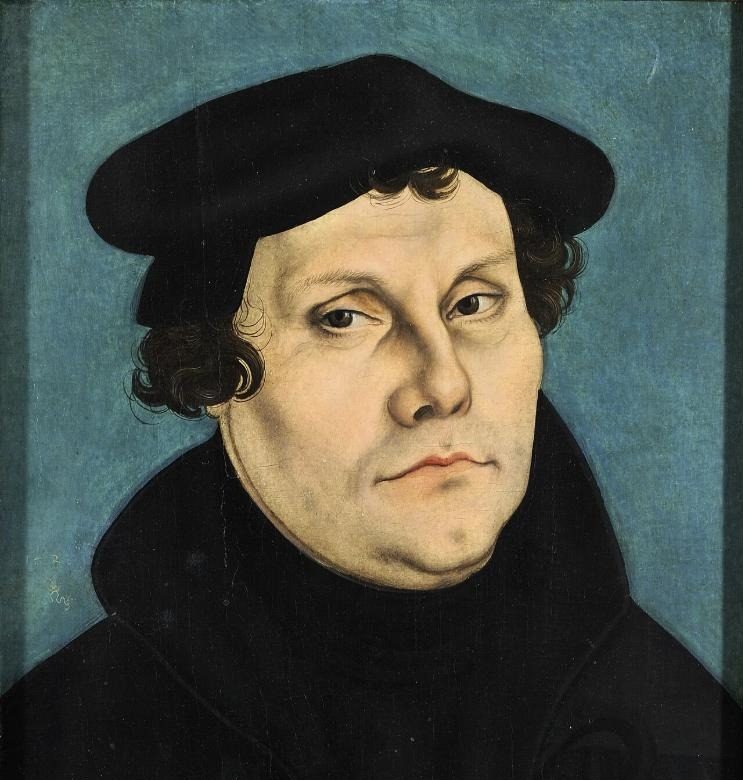
THE MONK. Luther was a German monk and Bible professor in Wittenberg, terrified that he could never be good enough for God. Reading Romans 1:17, The righteous will live by faith, he discovered that God's righteousness is a gift received by faith, not a reward earned by works.
OCTOBER 31, 1517. A friar named Johann Tetzel was selling indulgences to pay for St. Peter's Basilica in Rome. A popular saying of the day went, As soon as the coin in the coffer rings, the soul from purgatory springs. Luther sent his 95 Theses, points for debate, to the archbishop, and tradition says he nailed them to the church door in Wittenberg. The printing press spread them across Germany in weeks.
1521. Luther was excommunicated in January. In April, at the Diet of Worms, he was ordered to take back his books in front of the emperor. He refused unless proven wrong by Scripture and plain reason, saying his conscience was captive to the word of God. The famous line Here I stand, I can do no other, may have been added by later printers.
THE BIBLE FOR EVERYONE. Hiding at Wartburg Castle, Luther translated the New Testament into German in about 11 weeks. It came out in 1522, and the whole Bible in 1534.
WHAT HE TAUGHT. Later Protestants summed it up in five phrases: Scripture alone, grace alone, faith alone, Christ alone, and the glory of God alone. He also married a former nun, Katharina von Bora, in 1525, showing pastors could marry. He died in 1546.
John Calvin and the Burning of Michael Servetus
THE LAWYER. John Calvin was born in Noyon, France, in 1509 and trained to be a lawyer. Around 1533 he came to the Protestant faith, which he later called a sudden conversion. Protestants were being arrested in France, so he fled.
THE BOOK. In 1536, at just 26 years old, he published the first edition of the Institutes of the Christian Religion in Basel. He kept expanding it until the final edition of 1559. It became the most important book of Reformed teaching ever written.
GENEVA. Later in 1536 he passed through Geneva for one night. The preacher William Farel told him God would curse him if he left, so he stayed. The city threw him out in 1538, then begged him back in 1541, and he led the church there until he died on May 27, 1564. Refugees poured in from all over Europe. John Knox called Geneva the most perfect school of Christ since the days of the apostles.
Calvin taught that God is completely in charge of everything, including salvation, so no one can boast. That is the teaching of predestination. In 1618 to 1619 the Synod of Dort, in the Netherlands, defended it against the followers of Jacobus Arminius, who taught that people can freely accept or resist God's grace. The five points of Calvinism, often remembered as TULIP, come from Dort, not from Calvin himself. The Calvinist and Arminian argument still splits churches today. Presbyterians and many Baptists lean Calvinist. Methodists, Nazarenes and most Pentecostals lean Arminian.
The Man Who Was Burned
MICHAEL SERVETUS. Servetus was a brilliant Spanish doctor, one of the first in Europe to describe how blood moves through the lungs. He also denied the Trinity. He taught that Jesus was not the eternal Son of God, and he called the Trinity a three headed monster. He wrote books saying so in 1531 and 1553.
THE LETTERS. Servetus had written letters to Calvin for years, attacking his teaching. In 1546 Calvin wrote to Farel that if Servetus ever came to Geneva, he would not let him leave alive, if his authority counted for anything.
CAUGHT BY THE CATHOLICS FIRST. In 1553 a friend of Calvin's in Geneva, Guillaume de Trie, exposed Servetus to the Catholic Inquisition in France. To prove it, he passed along letters Servetus had written to Calvin, which Calvin had supplied. Servetus was arrested in Vienne, France, and escaped from prison. The Catholics burned him in effigy, a dummy in his place.
GENEVA. A few months later, for reasons nobody knows, Servetus showed up in Geneva. He was recognized at church on August 13, 1553, and arrested. Calvin wrote out the charges against him, and his secretary filed them. The city council, not Calvin, ran the trial and gave the sentence, after four other Protestant cities in Switzerland agreed he was guilty.
OCTOBER 27, 1553. Servetus was burned alive at Champel, just outside Geneva, with a copy of his book. Calvin had asked for a quicker death by the sword, and the council said no. Farel walked him to the stake. His last words were, Jesus, Son of the eternal God, have mercy on me. Even at the end he would not say eternal Son.
- THE HONEST VIEW
- In that age almost every church, Catholic, Lutheran and Reformed, believed heresy could be punished by death. Luther himself signed a 1531 paper by Melanchthon agreeing that Anabaptists who spread their teaching could be put to death. That does not make it right. Jesus told Peter to put away his sword, Matthew 26:52.
- THE PROTEST
- A former friend of Calvin, Sebastian Castellio, wrote, To kill a man is not to defend a doctrine, it is to kill a man.
- THE APOLOGY
- In 1903, on the 350th anniversary, Calvin's followers built a stone monument at Champel saying they condemned an error that was the error of his age.
- CONFIDENCE
- HIGH. The trial records and Calvin's own letters survive.
How the Reformation Forked
LUTHERAN, 1517 ON. Luther's followers. The Augsburg Confession of 1530 is their statement of faith. Today the Evangelical Lutheran Church in America, 1988, and the more conservative Lutheran Church Missouri Synod, 1847, are the biggest in the United States.
REFORMED, 1519 ON. Ulrich Zwingli in Zurich, starting 1519, and John Calvin in Geneva. They stressed God's sovereignty and disagreed with Luther about the Lord's Supper. Reformed churches spread from Switzerland to France, the Netherlands, Hungary and Scotland.
PRESBYTERIAN, 1560. John Knox, a follower of Calvin who had worked with him in Geneva, led the Scottish Reformation in 1560. Presbyterian means run by elders, presbyteros in Greek. In America the main branches are the PCUSA, formed in 1983, the more conservative Presbyterian Church in America, which split from the southern Presbyterian church in 1973, and the Orthodox Presbyterian Church, which split from the northern church in 1936.
ANABAPTIST, 1525. On January 21, 1525, in Zurich, Conrad Grebel and his friends baptized each other as adults. Anabaptist means rebaptizer. They said only believers should be baptized, the church should be separate from the state, and Christians should not fight in wars. Thousands were killed for it, by Catholics and Protestants alike. Their children today are the Mennonites, named for Menno Simons, who joined them in 1536, the Amish, who split from the Mennonites in 1693, and the Hutterites.
ANGLICAN, 1534. King Henry VIII wanted his marriage annulled, the pope said no, and in 1534 Parliament made the king the head of the Church of England. Under Thomas Cranmer the church became Protestant in belief, with the Book of Common Prayer in 1549. In America it became the Episcopal Church in 1789. The Anglican Church in North America formed in 2009 when conservatives left the Episcopal Church and the Anglican Church of Canada.
CONGREGATIONAL, 1600s. Puritans wanted to purify the Church of England. Some, like the Pilgrims of 1620, left it entirely and ran each church by its own members. Puritan Congregationalists started Harvard in 1636 and Yale in 1701.
BAPTIST, 1609. John Smyth, an English Separatist, baptized believers in Amsterdam in 1609. Thomas Helwys started the first Baptist church in England in 1612, and Roger Williams the first in America in Providence, Rhode Island, in 1638 or 1639. Baptists hold to believers' baptism by immersion, the authority of the Bible, and the freedom of each local church. In 1845 the Southern Baptist Convention split from Northern Baptists over slavery. In 1995 it apologized for it. Today it is the largest Protestant denomination in America.
QUAKERS, 1650s. George Fox taught that God's inner light speaks to every person. Traditional Quakers have no clergy and no outward sacraments, and they led early fights against slavery.
The Methodists and Their Splits
1738. John Wesley, an Anglican priest, felt his heart strangely warmed at a meeting on Aldersgate Street in London on May 24, 1738, while someone read Luther's preface to Romans. He and his brother Charles, who wrote more than 6,000 hymns, preached in fields to coal miners and factory workers. At Oxford, other students mocked them as Methodists because they lived by strict method, and the name stuck.
1784. At the Christmas Conference in Baltimore, the Methodist Episcopal Church was formed in America, separate from the Church of England.
THE SPLITS. In 1816 Richard Allen founded the African Methodist Episcopal Church after Black Methodists were mistreated in a white church in Philadelphia. In 1844 the Methodists split North and South over slavery. They came back together in 1939, and in 1968 joined with another group to form the United Methodist Church. Then from 2019 to 2023 about 7,600 United Methodist churches left, most over same sex marriage and gay clergy, and many joined the new Global Methodist Church, started in 2022.
THE HOLINESS MOVEMENT. Methodist teaching about a second work of grace grew into the Holiness churches in the 1800s, like the Salvation Army in 1865 and the Church of the Nazarene in 1908.
Do the Gifts Still Work Today?
Christians disagree about whether the miracle gifts of the Holy Spirit, like tongues, prophecy and healing, are still given today. There are two main answers.
- CESSATIONISM
- From cease. The miracle gifts were for the apostles, to prove their message and lay the foundation of the church, Ephesians 2:20 and Hebrews 2:3 to 4. Once the New Testament was finished, they stopped. Paul said tongues will cease when the perfect comes, 1 Corinthians 13:8 to 10, and cessationists say the perfect is the finished Bible.
- CONTINUISM
- Also called continuationism. All the gifts of the Spirit continue until Jesus comes back. The perfect is His return, when we will see face to face, 1 Corinthians 13:12. Peter said the promise of the Spirit is for you and your children and for all who are far off, Acts 2:39.
DID CALVIN INVENT CESSATIONISM? Not quite. He was its most important early voice, but the idea is older. About AD 392, John Chrysostom wrote that the gifts in 1 Corinthians 12 were hard to understand because such things used to happen but no longer took place. Around AD 390 Augustine wrote that miracles had not been allowed to continue into his time.
WHAT CALVIN SAID. Catholics told the Reformers, if your teaching is true, show us miracles. Calvin answered that miracles were given to seal the gospel when it was new, and that the gift of healing, like the other miracles, had vanished away. Cessationism became the normal Protestant view for the next 300 years.
WARFIELD. The classic modern case is Counterfeit Miracles, written in 1918 by B.B. Warfield of Princeton Seminary. He said the miracle gifts were the credentials of the apostles and died out with them. In 2013 pastor John MacArthur's Strange Fire conference and book made the same case against the charismatic movement.
The History of Continuism
THE EARLY CHURCH. About AD 155 Justin Martyr told a Jewish debater that the prophetic gifts remain with us even to the present time. About AD 180 Irenaeus wrote that he heard many believers who prophesied and spoke in all kinds of languages through the Spirit, and that even the dead had been raised.
A WARNING SIGN. In the 170s a man named Montanus and two women prophets in Phrygia claimed new revelations that went beyond Scripture. The church rejected them, and that made many bishops nervous about prophecy for centuries.
AUGUSTINE CHANGES HIS MIND. Late in life Augustine took back what he wrote earlier. In The City of God, about AD 426, he listed healings he had seen himself, and said that in his own town of Hippo alone nearly 70 had been written down in about two years.
LUTHER PRAYS. Luther agreed the church did not need miracles to prove the gospel, but he still prayed for the sick. In 1540 his friend Philip Melanchthon lay dying at Weimar. Luther prayed over him, telling God he had better listen, and Melanchthon recovered. Melanchthon said Luther had called him back from death itself.
WESLEY. In 1787 John Wesley preached that the gifts did not fade because the church no longer needed them. He said they faded because the love of many grew cold, and Christians became worldly. Early Quakers and Methodists both reported healings.
THE 1800s. In the 1830s Edward Irving's church in London had tongues and prophecy. Later in the 1800s a divine healing movement spread through the Holiness churches. A.B. Simpson, who in 1887 started the groups that became the Christian and Missionary Alliance, taught that Jesus is still our Healer. The stage was set.
The Pentecostal Movement
JANUARY 1, 1901. At Charles Parham's Bible school in Topeka, Kansas, a student named Agnes Ozman spoke in tongues. Parham taught that tongues are the first sign of being baptized in the Holy Spirit, Acts 2:4.
REVIVAL AROUND THE WORLD. In 1904 and 1905 the Welsh Revival under Evan Roberts swept Wales, and in 1905 revival broke out at Pandita Ramabai's Mukti Mission in India. Christians everywhere were praying for a new Pentecost.
WILLIAM SEYMOUR. Seymour was a Black preacher, the son of former slaves. Around the start of 1906 he studied under Parham in Houston, where segregation laws made him listen from the hallway. A few weeks later he was invited to preach in Los Angeles.
AZUSA STREET, 1906. On April 9, 1906, at a house on Bonnie Brae Street, Seymour's prayer group began speaking in tongues. The crowds grew so big that they moved to an old run down church building at 312 Azusa Street. On April 18 the Los Angeles Times mocked it with the headline Weird Babel of Tongues. For about three years, Black, white, Latino and Asian believers prayed side by side, at a time when that was almost unheard of. One visitor, Frank Bartleman, wrote that the color line was washed away in the blood.
IT SPREADS. Visitors carried the fire home. Within two years Pentecostal missionaries had gone to dozens of countries. In 1911 two Swedish missionaries started the church in Brazil that became the Assemblies of God, now one of the biggest Protestant churches in the world.
THE CHURCHES. The Church of God in Christ, founded in 1897, became Pentecostal in 1907. The Church of God of Cleveland, Tennessee, joined the movement by 1908. The Assemblies of God formed in 1914 at Hot Springs, Arkansas. In 1916 the Oneness Pentecostals split off over the Trinity, baptizing in Jesus' name only, and in 1945 they formed the United Pentecostal Church. In 1923 Aimee Semple McPherson opened Angelus Temple in Los Angeles, the start of the Foursquare Church.
HEALING REVIVALS. After World War 2, healing evangelists like Oral Roberts held huge tent meetings, and Kathryn Kuhlman filled stadiums. In 1958 David Yonggi Cho started a tent church in Seoul, Korea, that grew into the Yoido Full Gospel Church, once called the largest church in the world.
THE CHARISMATIC MOVEMENT. In 1960 an Episcopal priest in California, Dennis Bennett, told his church he had spoken in tongues. Soon Lutherans, Presbyterians and others were too. In February 1967, Catholic students at Duquesne University in Pittsburgh began the Catholic Charismatic Renewal. In the 1980s John Wimber's Vineyard churches spread a third wave of signs and wonders.
TODAY. Pentecostals and charismatics together number more than 600 million, about a quarter of all Christians, and they are growing fastest in Africa, Latin America and Asia.
- THIS BIBLE'S VIEW
- Continuism. Paul says, Do not forbid speaking in tongues, 1 Corinthians 14:39, and, Do not quench the Spirit. Do not despise prophecies, but test everything, 1 Thessalonians 5:19 to 21. Nowhere does the Bible say the gifts would stop before Jesus returns. Joel said the Spirit would be poured out in the last days, and Peter said those days had begun, Acts 2:16 to 17.
- WHERE CESSATIONISTS ARE RIGHT
- There are fakes, and some preachers have used healing to get rich. Test every spirit, 1 John 4:1. No prophecy today is equal to Scripture. And the greatest gift is still love, 1 Corinthians 13:13.
Other Groups From the 1800s and 1900s
RESTORATION MOVEMENT. Barton Stone and Alexander Campbell wanted to drop denominations and just be Christians. Their movement, joined in 1832, became the Churches of Christ, the Christian Church, also called the Disciples of Christ, and independent Christian churches.
SEVENTH DAY ADVENTISTS, 1863. Grew from William Miller's prediction that Jesus would return in 1844. They worship on Saturday.
NONDENOMINATIONAL. Since the 1960s, many churches have no denomination at all. Calvary Chapel, which grew under Chuck Smith starting in 1965, and today's megachurches are part of this. Nondenominational churches are now one of the biggest groups in America.
THE BLACK CHURCH. Shut out or mistreated in white churches, Black Christians built their own. Besides the AME Church of 1816, the National Baptist Convention formed in 1895 and is still the largest Black denomination in America, and the Church of God in Christ is the largest Black Pentecostal one. These churches were the backbone of the civil rights movement. Martin Luther King Jr. was a Baptist pastor.
THE JESUS MOVEMENT. In the late 1960s and early 1970s, thousands of hippies in California came to Jesus. A long haired young preacher named Lonnie Frisbee helped bring them into Calvary Chapel in Costa Mesa, where they were baptized in the Pacific Ocean. In 1971 Time magazine put The Jesus Revolution on its cover. It helped give us the Vineyard and modern worship music. In 2023 it became a movie, Jesus Revolution.
THE HOUSE CHURCHES OF CHINA. When the missionaries were thrown out of China after 1949, there were fewer than 1 million Protestants. Under persecution, believers kept meeting in homes. Today estimates vary widely, from about 20 million to around 100 million Christians in China, most of them Protestant.
OUTSIDE HISTORIC CHRISTIANITY. The Latter day Saints, 1830, and the Jehovah's Witnesses, 1870s, also came out of 1800s America, but both reject the Trinity of the Nicene Creed, so most Christian churches do not count them as Christian denominations.
Church History Timeline
- ABOUT AD 30 TO 33
- Pentecost. The church is born in Jerusalem.
- ABOUT AD 34
- The Ethiopian official is baptized, Acts 8.
- AD 64
- Nero's persecution in Rome.
- ABOUT AD 110
- Ignatius first calls it the catholic, universal, church.
- AD 303
- Diocletian's great persecution.
- AD 313
- The Edict of Milan makes Christianity legal.
- AD 325
- The Council of Nicaea.
- ABOUT AD 330
- King Ezana of Ethiopia becomes Christian.
- AD 380
- Christianity becomes the Roman state religion.
- AD 431 AND 451
- Ephesus and Chalcedon. The Church of the East and the Oriental Orthodox part ways.
- AD 590 TO 604
- Gregory the Great.
- AD 800
- Pope Leo III crowns Charlemagne.
- 1054
- The Great Schism, East and West.
- 1059
- Cardinals begin electing the pope.
- 1075
- Gregory VII: pope belongs to Rome alone.
- 1123 AND 1139
- Priests' marriages declared invalid in the West.
- 1204
- Crusaders sack Constantinople.
- 1215
- Fourth Lateran Council: transubstantiation.
- 1439
- Council of Florence: seven sacraments, purgatory.
- OCTOBER 31, 1517
- Luther's 95 Theses.
- 1519
- Zwingli begins the Reformed churches in Zurich.
- 1521
- Luther at the Diet of Worms.
- 1525
- The first Anabaptist baptisms.
- 1534
- The Church of England breaks from Rome. Luther's whole German Bible.
- 1536
- Calvin's Institutes. Calvin comes to Geneva.
- 1545 TO 1563
- The Council of Trent, Rome's answer to the Reformation.
- 1553
- Michael Servetus burned in Geneva.
- 1560
- The Scottish Reformation, Presbyterians.
- 1609 AND 1612
- The first Baptist churches.
- 1618 TO 1619
- The Synod of Dort, Calvinists against Arminians.
- 1693
- The Amish split from the Mennonites.
- 1738
- Wesley's heart strangely warmed.
- 1784
- The Methodist Episcopal Church in America.
- 1816
- The African Methodist Episcopal Church.
- 1844 AND 1845
- Methodists and Baptists split North and South over slavery.
- 1854, 1870, 1950
- Catholic Mary and papal infallibility teachings.
- 1901 AND 1906
- Topeka and Azusa Street. Pentecostalism begins.
- 1914
- The Assemblies of God.
- 1918
- Warfield's Counterfeit Miracles.
- 1959
- The Ethiopian church gets its own patriarch.
- 1960 AND 1967
- The charismatic movement in Protestant and Catholic churches.
- 1962 TO 1965
- The Second Vatican Council.
- 1965
- East and West lift the 1054 excommunications.
- 2019 TO 2023
- The United Methodist split.
The Verdict
Christians have split many times, sometimes over the gospel itself and sometimes over things that did not need to divide them. Luther did not set out to start a new church. He wanted to call the church back to the Bible and to grace through faith in Christ.
Underneath the labels, the churches that hold to the Bible and the Nicene Creed still share the most important things: one God in three persons, Jesus fully God and fully man, who died for our sins and rose again. Jesus prayed that His people would be one, John 17:21. Know your church's story, but remember whose church it really is.
Next questionWho Was the Real Santa Claus?See the Whole Bible in Color
Free. No spam. Unsubscribe anytime.Something went wrong. Please try again, or email [email protected].