
Frequently Asked Questions · Question 3 of 10
How Did the Twelve Apostles Die?
What history says about the men who said they saw Jesus alive, and why it matters.
- THE QUESTION
- The apostles said they saw Jesus alive after He was crucified. What did that claim cost them?
- THE SHORT ANSWER
- Everything. The Bible and the early church say they were beaten, jailed, run out of town, and many were killed. Not one of them is ever recorded taking it back.
- THE HONEST PART
- For some apostles we have strong evidence. For others we only have legends written hundreds of years later, and they do not always agree. This page tells you which is which.
- THE BIG IDEA
- People die for lies they believe are true. Nobody dies for a lie they know is a lie. The apostles were in a position to know.
Get Nate's Highlighting Guide Free
Free. No spam. Unsubscribe anytime.Something went wrong. Please try again, or email [email protected].
How Do We Know Anything About This?
The New Testament tells us how only two of the Twelve died. James, the brother of John, was killed for his faith. Judas Iscariot killed himself. For the rest, we depend on what Christians wrote after the Bible. Some of those writers were close to the events. Some were not. Here are the main kinds of sources, from best to worst.
THE BIBLE. Acts records the deaths of Stephen and James, and Jesus Himself predicted how Peter would die, John 21:18 to 19.
EARLY CHURCH WRITERS. Clement of Rome, about AD 96, wrote about Peter and Paul dying for their faith. He wrote from Rome, the city where later writers say they died. Later writers like Irenaeus, Tertullian, Origen and Clement of Alexandria added more, from about AD 180 to 250.
EUSEBIUS. About AD 325 the church historian Eusebius gathered many older reports in his Church History. He often quotes books that are now lost.
THE APOCRYPHAL ACTS. Books like the Acts of Peter, the Acts of Andrew and the Acts of Thomas were written from about AD 150 to 250 and later. They read like adventure novels, full of talking animals and wild miracles. They may keep some real memories, but you have to be careful with them.
MEDIEVAL LEGENDS. The Golden Legend, written in the 1260s, and Foxe's Book of Martyrs, from 1563, spread many of the stories you see online today. Most of their details cannot be traced back to early sources.
A Christian scholar named Sean McDowell spent years sorting all of this for his 2015 book The Fate of the Apostles. This page follows his kind of honest rating: HIGH when the evidence is strong, MEDIUM when it is likely, and LOW when it is only legend.
Peter
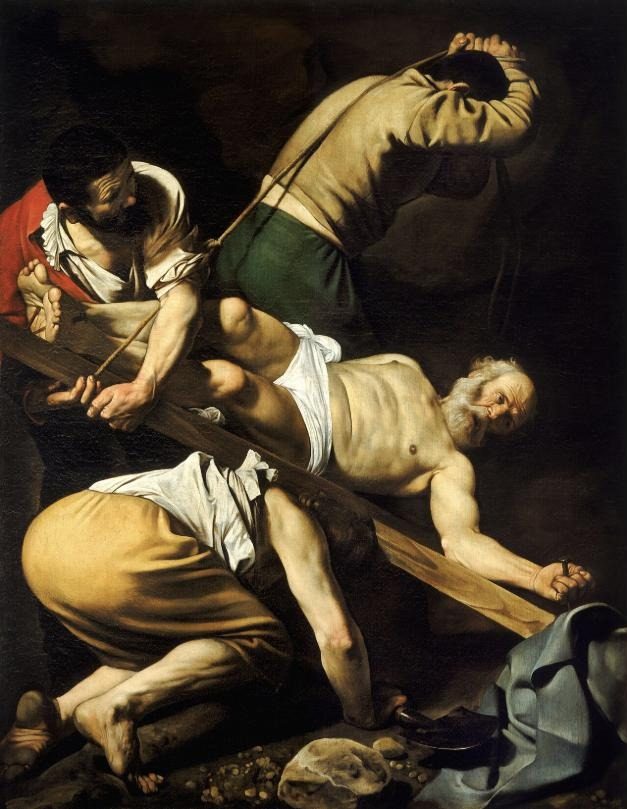
Peter was a fisherman, the loudest of the Twelve, and the one who denied Jesus three times on the night He was arrested. Fifty days later he was preaching in the streets of Jerusalem that Jesus had risen.
- HOW HE DIED
- Crucified in Rome under Emperor Nero, about AD 64 to 67.
- THE EVIDENCE
- Jesus told Peter that when he was old, someone would stretch out his hands and take him where he did not want to go, to show by what kind of death he would glorify God, John 21:18 to 19. About AD 96, Clement of Rome wrote that Peter suffered many hardships and, having borne his witness, went to the place of glory. About AD 200, Tertullian said Peter was crucified in Rome like his Lord.
- UPSIDE DOWN?
- The Acts of Peter, about AD 180 to 190, says he asked to be crucified head down. Origen, about AD 250, says the same. Later, about AD 390, Jerome wrote that Peter felt he was not worthy to die the same way as Jesus. It is possible, but it comes from later sources.
- CONFIDENCE
- HIGH that Peter died as a martyr in Rome. MEDIUM for upside down.
Andrew
Andrew was Peter's brother and one of the first two disciples to follow Jesus, John 1:35 to 42. He was the one who brought Peter to Jesus, and later brought the boy with the five loaves and two fish, John 6:8 to 9.
- HOW HE DIED
- Crucified at Patras, in Greece, according to the Acts of Andrew, written about AD 150 to 200. It says he was tied to the cross instead of nailed, so he suffered longer, and he preached to the crowd for days before he died.
- CONFLICTING STORIES
- Origen says Andrew preached in Scythia, near the Black Sea. The X shaped cross he is famous for, now on the flag of Scotland, comes from the Middle Ages. Early sources do not say what shape his cross was.
- CONFIDENCE
- MEDIUM that he was martyred. LOW for the X shaped cross.
James, Son of Zebedee
James and his brother John were fishermen whom Jesus nicknamed the Sons of Thunder, Mark 3:17. James was one of the three closest to Jesus, with Peter and John.
- HOW HE DIED
- Killed with the sword by King Herod Agrippa I in Jerusalem, about AD 44. He was the first of the Twelve to die for Jesus, Acts 12:1 to 2.
- A STORY ABOUT HIS DEATH
- Clement of Alexandria, about AD 200, as quoted by Eusebius, tells of the man who brought James to trial. When he saw James's courage, he became a believer on the spot, and the two were beheaded together.
- ALSO TOLD
- A medieval legend says James's body was carried to Spain. The famous pilgrimage to Santiago de Compostela grew from it.
- CONFIDENCE
- HIGH. It is in the Bible.
John
John was James's brother. Christians have long believed he was the beloved disciple Jesus spoke to from the cross, John 19:26 to 27. Jesus told James and John that they would drink the cup He would drink, Mark 10:39.
- HOW HE DIED
- Most early sources say John died of old age in Ephesus, in what is now Turkey, around AD 100, during the reign of Emperor Trajan. Irenaeus, about AD 180, says John lived in Ephesus until the time of Trajan. Irenaeus learned from Polycarp, who knew John. Polycrates of Ephesus, about AD 190, says John died there.
- HE STILL SUFFERED
- John was arrested and beaten with the other apostles, Acts 5:40, and later exiled to the island of Patmos for the word of God and the testimony of Jesus, Revelation 1:9. Tertullian, about AD 200, says John was dropped into boiling oil in Rome, came out unharmed, and was then sent to Patmos.
- CONFLICTING STORIES
- A fragment said to come from Papias, about AD 130, claims John was killed by the Jews. We only know it from writers who lived hundreds of years later, and most scholars doubt it.
- CONFIDENCE
- HIGH that he suffered for his faith. MEDIUM to HIGH that he died of old age. LOW for the boiling oil.
Philip
Philip was from Bethsaida, the same town as Peter and Andrew. He brought Nathanael to Jesus, saying, Come and see, John 1:44 to 46.
- HOW HE DIED
- Philip died in Hierapolis, in what is now Turkey. About AD 190, Bishop Polycrates of Ephesus wrote that Philip, one of the Twelve, was buried there with two of his daughters. He does not say how Philip died.
- CONFLICTING STORIES
- The Acts of Philip, written in the 300s, says he was crucified upside down or hung by his ankles. Heracleon, about AD 170, lists Philip with apostles who did not die as martyrs. Some scholars also think Polycrates mixed him up with Philip the evangelist of Acts 6 and 21, who also had daughters.
- HIS TOMB
- In 2011 Italian archaeologists said they found a tomb in Hierapolis that early Christians honored as Philip's.
- CONFIDENCE
- MEDIUM to HIGH that he died in Hierapolis. LOW to MEDIUM that he was martyred.
Bartholomew
Bartholomew is probably the same man John calls Nathanael, the one Jesus called a true Israelite with nothing false in him, John 1:47. His name almost always appears next to Philip's.
- HOW HE DIED
- The most famous tradition says he preached in Armenia and was skinned alive and then beheaded or crucified there. The Armenian Apostolic Church honors him and Thaddeus as its founders. In Michelangelo's Last Judgment in the Sistine Chapel, Bartholomew holds his own skin.
- CONFLICTING STORIES
- Other legends say he was beheaded, crucified, or put in a sack and thrown into the sea. Eusebius says a teacher named Pantaenus visited India around AD 180 and found a Gospel of Matthew in Hebrew letters that Bartholomew had left there.
- CONFIDENCE
- LOW. The stories are late and do not agree, though Armenia is the strongest tradition.
Thomas
Thomas is remembered as Doubting Thomas, because he said he would not believe until he touched the wounds. When Jesus showed him, Thomas said, My Lord and my God, John 20:24 to 28. Before that, he was the one ready to die with Jesus, John 11:16.
- HOW HE DIED
- By tradition, speared to death in India. The Acts of Thomas, written in Syria in the early 200s, says soldiers of an Indian king killed him with spears.
- THE INDIA EVIDENCE
- The Acts of Thomas names a king called Gondophares. People once thought he was made up, but coins and an old stone inscription prove he was a real king who ruled part of what is now Pakistan and India in the first century. The Saint Thomas Christians of southern India say he came to them in AD 52 and was killed near what is now Chennai in AD 72. His traditional tomb is at the San Thome church there.
- CONFLICTING STORIES
- Origen says Thomas preached in Parthia, in Persia. Heracleon lists him with apostles who did not die as martyrs.
- CONFIDENCE
- MEDIUM. India is one of the strongest traditions we have for any apostle.
Matthew
Matthew, also called Levi, was a tax collector, a man most Jews hated as a traitor who worked for Rome. He left his tax booth to follow Jesus and threw a party for his friends, Luke 5:27 to 29.
- HOW HE DIED
- We do not know. Legends say he was killed in Ethiopia, in Persia or in Parthia, by sword, by spear, by fire or by stoning.
- A SURPRISE
- About AD 170 a teacher named Heracleon, quoted by Clement of Alexandria, said Matthew was not one of those who confessed Christ before judges and died for it. Heracleon was a Gnostic teacher the church rejected, but his list is one of the oldest we have.
- CONFIDENCE
- LOW for any one story.
James, Son of Alphaeus
We know almost nothing about this James except his name in the lists of the Twelve. He is often called James the Less, and in old writings he is easily mixed up with James the brother of Jesus.
- HOW HE DIED
- Legends say he was stoned in Jerusalem, crucified in Egypt, or sawn in pieces. Many of these stories really belong to James the brother of Jesus.
- CONFIDENCE
- LOW.
Thaddeus, Also Called Judas Son of James
Matthew and Mark call him Thaddeus. Luke and John call him Judas, not Iscariot, John 14:22. He asked Jesus at the Last Supper why He would show Himself to the disciples but not to the world.
- HOW HE DIED
- A popular tradition says he and Simon the Zealot preached together in Persia and were killed there, Thaddeus by a club or an axe, and Simon by being sawn in half.
- CONFLICTING STORIES
- Armenian tradition says he was martyred in Armenia. Other stories send him to Edessa, in what is now Turkey, but that may be a different Thaddeus, one of the seventy disciples Jesus sent out, Luke 10:1. Some Bibles say seventy two.
- CONFIDENCE
- LOW.
Simon the Zealot
The Zealots were Jews who wanted to drive the Romans out, by force if needed. Some scholars think Simon's name may just mean he was zealous for God's law. Jesus put Simon the Zealot on the same team as Matthew the tax collector, a man who had worked for Rome. Only Jesus could make that work.
- HOW HE DIED
- Legends disagree more for Simon than almost anyone. Sawn in half in Persia, crucified in Britain, crucified in Samaria, or died peacefully in Edessa.
- A MIX UP
- Hegesippus, about AD 170, says Simeon, a relative of Jesus who led the church in Jerusalem, was crucified at about 120 years old under Trajan. Some later writers mixed him up with Simon the Zealot.
- CONFIDENCE
- LOW.
Judas Iscariot
Judas was the treasurer of the Twelve, and he stole from the money bag, John 12:6. He sold Jesus for 30 pieces of silver.
- HOW HE DIED
- He killed himself. Matthew 27:5 says he hanged himself. Acts 1:18 says he fell headlong, his body burst open and his insides spilled out.
- DO THEY CONFLICT?
- Most Bible teachers see two views of the same death: he hanged himself, and his body later fell, maybe when the rope or the branch broke. Matthew tells how he died, and Luke, in Acts, tells what happened to the body.
- CONFIDENCE
- HIGH. It is in the Bible.
Notice the contrast. The apostle who betrayed Jesus died in guilt by his own hand. The others died, or suffered, for what they said they had seen.
Matthias, Who Took Judas's Place
After Jesus went up to heaven, the apostles needed a twelfth man who had been with them from John's baptism until Jesus was taken up, a witness of His resurrection, Acts 1:21 to 22. They cast lots and chose Matthias, Acts 1:26.
- HOW HE DIED
- Legends say he was stoned and then beheaded in Jerusalem, or that he preached and died in Ethiopia or in Colchis, in what is now Georgia.
- CONFIDENCE
- LOW.
Two More Witnesses: Paul and James
PAUL. Paul was not one of the Twelve, but he saw the risen Jesus on the road to Damascus, 1 Corinthians 15:8. He went from hunting Christians to being hunted. Five times the Jewish leaders gave him 39 lashes. He was beaten with rods three times, stoned once and shipwrecked three times, 2 Corinthians 11:24 to 25. Clement of Rome says he died for his faith. Tertullian and Eusebius say he was beheaded in Rome under Nero. Beheading was the death for a Roman citizen. CONFIDENCE: HIGH.
JAMES, THE BROTHER OF JESUS. During Jesus' ministry, His own brothers did not believe in Him, John 7:5. Then the risen Jesus appeared to James, 1 Corinthians 15:7, and James became the leader of the church in Jerusalem. The Jewish historian Josephus, who was not a Christian, says the high priest Ananus had James stoned in AD 62. Hegesippus says he was thrown from the temple, stoned and clubbed to death. CONFIDENCE: HIGH. What would it take for you to believe your brother was God?
STEPHEN. Not an apostle, but the first Christian martyr. He was stoned in Jerusalem while Saul, who later became Paul, watched over the coats of the men who stoned him, Acts 7:58 to 60 and 22:20.
What the Internet Lists Get Wrong
You have probably seen a meme that says all the apostles but John were martyred, with a gory death for each one. It is good preaching, but it overstates the case. For about half of the Twelve, all we have are legends from centuries later, and some early writers say a few of them died naturally.
Here is the good news. The argument does not depend on every apostle dying a martyr's death. It depends on something we know much more firmly: every one of them was willing to suffer for what he claimed to have seen. They were jailed and beaten, Acts 5:18 and 40. They were threatened and told to stop, and they answered, We cannot stop speaking about what we have seen and heard, Acts 4:20. And in all the records, friendly or hostile, there is not one story of an apostle taking it back.
Nobody Dies For a Lie
BUT PEOPLE DIE FOR LIES ALL THE TIME? True. The men who flew the planes on September 11, 2001 died for a lie. So did the followers of Jim Jones in 1978 and the Heaven's Gate group in 1997. But they died for something they believed. They did not make it up. They got it from someone else.
THE APOSTLES WERE DIFFERENT. They did not get the resurrection secondhand. They said they saw Jesus alive, talked with Him and ate with Him, Acts 10:39 to 41 and 1 John 1:1 to 3. If it was a lie, they knew it was a lie, because they were the ones who would have made it up. People will die for a lie they believe. Nobody dies for a lie they know is a lie.
THEY GOT NOTHING FOR IT. People lie to get money, power, fame or safety. The apostles got poverty, prison, beatings and death. Paul said if Christ has not been raised, we are of all people most to be pitied, 1 Corinthians 15:19.
THEY COULD HAVE WALKED AWAY. Around AD 112, Pliny, the Roman governor from Exhibit A, wrote that he let Christians go free if they would curse Christ and worship the emperor's statue, and he executed those who would not. These were ordinary Christians years after the apostles, but they faced the same choice. A few words and a pinch of incense would have saved them.
SOMETHING CHANGED THEM. On the night Jesus was arrested, they all ran away, Mark 14:50. Peter swore three times that he did not even know Him. A few weeks later the same men stood up in front of the same leaders who killed Jesus and would not stop talking. Cowards do not turn into heroes for a story they invented.
THE WATERGATE TEST. Chuck Colson was one of President Nixon's top men and went to prison for a crime tied to the Watergate scandal. He later wrote that the most powerful men in America could not keep a lie together for even three weeks once they faced prison. Yet the apostles kept their story for decades, under beatings, prison and death, and not one of them broke. Colson said that is how he knew the resurrection was true.
What This Means for You
The apostles were not asking anyone to believe a nice idea. They were telling people what they saw. They bet their lives on it, and most of them lost their lives for it.
Jesus told Thomas, Blessed are those who have not seen and yet have believed, John 20:29. You were not there. But the people who were there put their names, their freedom and their lives behind one message: He is risen.
The Twelve at a Glance
- PETER
- Crucified in Rome, about AD 64 to 67. Maybe upside down. HIGH.
- ANDREW
- Crucified at Patras, Greece. The X cross is a later legend. MEDIUM.
- JAMES, SON OF ZEBEDEE
- Killed with the sword by Herod Agrippa I, about AD 44, Acts 12:2. HIGH.
- JOHN
- Exiled to Patmos. Died of old age in Ephesus, about AD 100. HIGH that he suffered, MEDIUM to HIGH for natural death.
- PHILIP
- Died in Hierapolis. Martyrdom stories are late. LOW to MEDIUM.
- BARTHOLOMEW
- Skinned alive in Armenia, by tradition. Other stories differ. LOW.
- THOMAS
- Speared in India, about AD 72, by tradition. MEDIUM.
- MATTHEW
- Unknown. Legends disagree, and one early source says natural death. LOW.
- JAMES, SON OF ALPHAEUS
- Unknown. Often mixed up with James the brother of Jesus. LOW.
- THADDEUS
- Killed in Persia or Armenia, by tradition. LOW.
- SIMON THE ZEALOT
- Sawn in half in Persia, by one tradition. Many others. LOW.
- JUDAS ISCARIOT
- Hanged himself, Matthew 27:5 and Acts 1:18. HIGH.
- MATTHIAS
- Stoned in Jerusalem or died abroad, by tradition. LOW.
- PAUL
- Beheaded in Rome under Nero. HIGH.
- JAMES, BROTHER OF JESUS
- Stoned in Jerusalem in AD 62, Josephus. HIGH.
- STEPHEN
- Stoned in Jerusalem, Acts 7. HIGH.
- WHAT IS STRONGEST
- Every apostle suffered for saying Jesus rose from the dead. None of them ever took it back.
The Verdict
History cannot tell us exactly how every apostle died. Some died on crosses, some by the sword, some by spears and stones, and at least one, John, most likely died an old man in Ephesus. But it tells us something more important. Every one of them faced suffering, and not one of them changed his story.
Liars break under pressure. Witnesses do not. We did not follow cleverly devised myths, but we were eyewitnesses, 2 Peter 1:16.
Next questionDidn't They Take Books Out of the Bible at the Council of Nicaea?See the Whole Bible in Color
Free. No spam. Unsubscribe anytime.Something went wrong. Please try again, or email [email protected].