
The Owner's Manual Apocrypha · THE APOCRYPHA · 64 BOOKS BESIDE THE BIBLE
About the Apocrypha
The Truth About the "Extra Books"
- WHAT THEY ARE
- 64 old books that sit beside the Bible. They were written from about 300 BC to about AD 400. Two came later, and we tell you which. The Jewish books come first, then the early Christian ones.
- WHO READS THEM
- 12 are in Catholic Bibles. 6 more are in Orthodox Bibles. 7 more are in the Ethiopian Bible. The other 39 are in no church's Bible today, but believers have read and copied them for centuries.
- LANGUAGES
- Written in Hebrew, Aramaic and Greek. Some now survive only in Latin, Syriac, Coptic, Ge'ez or Old Slavonic.
- ON THIS SITE
- All 64, free to read in The Owner's Manual Apocrypha, in TOM's own modern English. The Owner's Manual Bible itself has the 66 books.
- OUR VIEW
- The same as Martin Luther's: good and useful to read, but not equal to Holy Scripture.
Get Nate's Highlighting Guide Free
Free. No spam. Unsubscribe anytime.Something went wrong. Please try again, or email [email protected].
Why This Page Is Here
Pick up a Catholic Bible and you will find Tobit and Judith. Pick up an Ethiopian Bible and you will find Enoch. Go online and someone will tell you a secret council ripped books out of the Bible to hide the truth.
So we put them all on one shelf. This library has 64 of them. They were written from about 300 BC to about AD 400. Two came later. Josippon, a Jewish history in Hebrew, was written in Italy about AD 950. The Testament of Our Lord, the first half of the Book of the Covenant, comes from the 400s.
The older Jewish books come first, most from the 400 quiet years between Malachi and Jesus. Then come the early Christian books, from the generations after the apostles.
Here is where we land. Martin Luther said these books are good to read, but they are not Scripture. We agree. Catholic, Orthodox and Ethiopian believers count some of them as Scripture, and we will tell you which ones and why, fairly. Read them, learn from them, and build your faith on the 66.
The 400 Quiet Years
Malachi was the last prophet of the Old Testament, about 430 BC. After him, about 400 years go by with no new prophet. The Jews themselves said so. 1 Maccabees, written about 100 BC, says three times that there was no prophet in its day, 4:46, 9:27 and 14:41. About AD 95 the Jewish historian Josephus wrote that books written after the time of Artaxerxes, Nehemiah's king, were not trusted like the earlier ones, because the line of prophets had stopped.
The years were quiet for prophets, but not for history. The Persians ruled until Alexander the Great swept through in 332 BC. After that, Greek became the language of trade and government all over the world. Alexander's generals split his empire, and the Jews were ruled first from Egypt and then from Syria.
In 167 BC the Syrian king Antiochus IV outlawed the Jewish faith and set up an altar to Zeus in the temple. A priest named Mattathias and his sons, the Maccabees, fought back. In 164 BC they took back the temple and dedicated it again. That is the start of Hanukkah. Then in 63 BC Rome took Jerusalem, and the stage was set for Jesus.
Most of the Jewish books on this shelf were written in these years or just after them. They are real windows into the world Jesus was born into. But they came after the prophets had gone quiet.
The Septuagint: the Greek Old Testament
So many Jews lived in Egypt and spoke Greek that they needed their Bible in Greek. About 250 BC, Jewish scholars in Alexandria began translating the five books of Moses. The rest of the Old Testament was translated over the next hundred years or more. A legend said 72 scholars did the work, so the Greek Bible is called the Septuagint, from the Latin word for seventy, and it is written LXX. That legend is told in the Letter of Aristeas, one of the books on this shelf.
The early church spoke Greek, so the Septuagint became its Old Testament. Over time, Greek copies also carried other Jewish books. The oldest full Greek Bibles we have are Christian books from the 300s and 400s AD, like Codex Sinaiticus. Many scholars now doubt that the Jews ever had a separate, bigger Greek Bible list. The extra books simply traveled with the Greek copies.
Apocrypha or Deuterocanonical?
The same books go by different names, and the names tell you what each church believes about them.
APOCRYPHA. This Greek word means hidden or set apart. About AD 391 Jerome, who translated the Bible into Latin, used it for books that were not in the Hebrew Bible. Protestants still call them the Apocrypha.
DEUTEROCANONICAL. This means second canon, a second list. A Catholic scholar named Sixtus of Siena first used the word in 1566. The Catholic Church made the list official at the Council of Trent on April 8, 1546. Earlier councils, like Carthage in 397, had already listed them. To Catholics they are fully Scripture, only added to the list later.
THE READABLE BOOKS. Many Orthodox teachers call them the anagignoskomena, a Greek word for the books that are read. They are honored and read in church, but many Orthodox put them a step below the Hebrew books.
PSEUDEPIGRAPHA. This means falsely titled. It is used for books written under the name of a famous person who lived long before, like Enoch. Protestants and Catholics put 1 Enoch and Jubilees in this group. The Ethiopian church counts them as Scripture. Most of the Jewish books in our last group, like 2 Enoch and the Testament of Moses, belong here too.
THE APOSTOLIC FATHERS. This is the name scholars give to Christian writings from about AD 90 to 150, by leaders who came right after the apostles. 1 Clement, the Didache, the letters of Ignatius and Polycarp, Barnabas and the Shepherd of Hermas are all on this shelf.
Were They Taken Out of the Bible?
Not the way the internet tells it. Here is what happened.
LUTHER, 1534. In his German Bible, Luther moved the extra books out of the Old Testament into their own section, with this heading: “Apocrypha. These are books which are not held equal to the Holy Scriptures, and yet are useful and good to read.” He did not throw them away. He put them in their place.
THE KING JAMES BIBLE, 1611. The first King James Bible printed 14 of these books between the Testaments, under the title Apocrypha. The Church of England said in its Articles of Religion that they are read for example of life and instruction of manners, but not used to establish any doctrine. So even in 1611 they were not treated as Scripture.
LEFT OUT OVER TIME. Printers often left the section out to make Bibles smaller and cheaper. In 1826 the British and Foreign Bible Society stopped paying for Bibles that had it. When the Revised Version came out, its Apocrypha was printed on its own in 1895. Nobody stole them. Protestants never counted them as Scripture, and over time they simply stopped printing them.
THE REST OF THE SHELF. Most of the books in our last group were never in any church's Bible, so nobody could take them out. A few early Christian books did ride along in old Bibles for a while, like 1 Clement, Barnabas and Hermas. We explain why they did not stay, below.
Jesus Never Quoted Them as Scripture
Jesus and the writers of the New Testament quote the Old Testament around 300 times. They say It is written, or Scripture says, or as the prophet said. Not once do they quote one of these books that way. The closest the New Testament comes is Jude, below.
Of course the New Testament could not quote the Christian books on this shelf. Most of them were written after it. Many of them quote it.
Jesus named the parts of His Bible in Luke 24:44: the Law of Moses, the Prophets and the Psalms. Those are the three parts of the Hebrew Bible, the same books as our 39. In Matthew 23:35 He spoke of the blood of the prophets from Abel to Zechariah. Abel is killed in Genesis, and a Zechariah is stoned in 2 Chronicles 24:20 to 21, the last book of the Hebrew Bible. Many scholars think He meant from the first page to the last.
To be fair, here is what the New Testament does with the extra books.
ECHOES. Some lines sound like them. Hebrews 11:35 speaks of people tortured who would not accept release, to gain a better resurrection. Hebrews 11:37 says some were sawn in two, and the Ascension of Isaiah tells that story about Isaiah. Romans 1 and Wisdom 13 to 14 both say idol makers have no excuse. These writers knew the old stories, but they never call these books Scripture.
AN EVENT. John 10:22 says Jesus was in the temple at the Feast of Dedication. That is Hanukkah, from 1 Maccabees 4. Being at a feast is not quoting a book.
JUDE AND ENOCH. Jude 14 to 15 quotes 1 Enoch 1:9 and says Enoch prophesied. This is the closest the New Testament comes. Jude 9, about Michael arguing with the devil over the body of Moses, seems to come from the lost ending of the Testament of Moses. But quoting one true line does not make a whole book Scripture. Paul quoted Greek poets too, in Acts 17:28, 1 Corinthians 15:33 and Titus 1:12, and nobody thinks their poems belong in the Bible.
The Prophecy Test
God gave Israel a test for anyone who claimed to speak for Him. If what he says does not come true, the LORD has not spoken it, Deuteronomy 18:21 to 22. And God points to prophecy as His own signature: I declare the end from the beginning, Isaiah 46:9 to 10.
The editors of The Owner's Manual counted every prophecy and foreshadow in the 66 books and in the extra books of Catholic, Orthodox and Ethiopian Bibles. The difference is huge.
- THE 66 BOOKS
- 1,051 prophecies and foreshadows. More than 400 point to Jesus. About 116 others came true in history, like the fall of Babylon. About 195 are about the end of the age and are still waiting to be fulfilled.
- THE EXTRA BOOKS
- One that points ahead to something that happened after it was written: Wisdom of Solomon 2:12 to 20.
- WHERE THE EXTRA BOOKS FIT
- 1 and 2 Maccabees record 24 prophecies from the 66 books coming true: 19 from Daniel 8, 9 and 11, plus Ezekiel 25, Obadiah 18 and Zechariah 9. The extra books are where the Bible's predictions come true, not where the predictions come from.
The rest of the shelf follows the same pattern. The Testament of Moses, 2 Baruch and the Apocalypse of Abraham tell history the writer already knew as if it were still in the future. The Christian books were written after Jesus came, so they look back to Him, not ahead.
Where the Prophecy Actually Is
The extra books are not empty of the future. Here is every place the Catholic, Orthodox and Ethiopian extra books look ahead, plus one from the rest of the shelf, and what happened.
WISDOM 2:12 TO 20. A righteous man calls God his Father and is mocked: if he is God's son, God will help him. Then he is condemned to a shameful death. At the cross the leaders said, He trusts in God, let God deliver Him now, Matthew 27:43. Many Christians see Jesus here, though the writer may have meant any righteous person.
TOBIT 13 TO 14. Tobit foretells the fall of Nineveh, the exile and the return. But Tobit was written about 400 years after Nineveh fell, so the writer already knew. He also sees a Jerusalem built of sapphires and emeralds, and all nations turning to God. That is still future, and it is borrowed from Isaiah 54:11 to 12 and Isaiah 60.
BARUCH 4:36 TO 5:9. Jerusalem's children come home from east and west, and the mountains are made low. This echoes Isaiah 40:4. The return from Babylon had already happened when it was written. The final gathering of God's people is still future, and Isaiah said it first.
SIRACH 48:10. Elijah will come to turn the hearts of fathers to their children. This repeats Malachi 4:5 to 6. Jesus said it was fulfilled in John the Baptist, Matthew 11:14 and 17:12.
WISDOM 3:7 TO 8 AND JUDITH 16:17. The righteous will judge the nations, and God will punish the enemies of His people with fire and worms on the day of judgment. These are end times hopes that are still waiting. They come from Daniel 7:22 and Isaiah 66:24. Paul says the same in 1 Corinthians 6:2.
2 ESDRAS 7:28 TO 29 AND 11 TO 13. Visions of God's son the Messiah, an eagle that stands for Rome, and a man rising from the sea. But this book was written about AD 100, after Jesus came. It says the Messiah will reign 400 years and then die with everyone else. That did not happen, and it is not what the Bible teaches.
1 ENOCH 1:9. The Lord comes with ten thousands of His holy ones to judge. Jude quotes it, and it is still waiting for the return of Jesus. Other parts of 1 Enoch tell Israel's history up to the Maccabees as if it were prophecy, but those parts were written in the 160s BC, after the events.
JUBILEES 23. A day will come when people return to God's law and live close to a thousand years. Still waiting, and the book was written about 160 to 150 BC.
TESTAMENT OF MOSES 6. Written about AD 7 to 30, it knows Herod the Great ruled 34 years. Then it guesses his sons will rule for less time than he did, 6:7. Two of them ruled longer.
- THE PATTERN
- Almost every look ahead in these books does one of three things. It was written after the event, it repeats a prophecy from the 66 books, or it never came true.
- THE COUNT
- Of the 195 end times prophecies still waiting, every one we counted is in the 66 books. The extra books add no new prophecy of their own that has come true, except possibly Wisdom 2.
Who Really Wrote Them?
Many old books carry a famous name. Writing in the voice of an old hero was a common style back then. But it still matters. The early church asked of every book, did it come from a prophet or an apostle? A borrowed name fails that test before you read a word.
BORROWED NAMES FROM THE OLD TESTAMENT. 1 Enoch and 2 Enoch speak as Enoch, who lived before the Flood. Jubilees says an angel told it to Moses. The Wisdom of Solomon and the Testament of Solomon speak as Solomon. The Apocalypse of Abraham, the Testament of Moses, the Testament of Job, the Testaments of the Twelve Patriarchs, the Testaments of Isaac and Jacob, the Ascension of Isaiah and the Apocryphon of Ezekiel all speak in the voice of men who lived many centuries before.
BARUCH AND EZRA. Baruch, 2 Baruch and 3 Baruch speak as Baruch, Jeremiah's scribe, and the last two were written 600 years after him. 2 Esdras speaks as Ezra, 500 years late. The Letter of Jeremiah and the Prayer of Manasseh fill in a letter and a prayer the Bible mentions but does not give.
BORROWED NAMES FROM THE APOSTLES. The Apocalypse of Peter speaks as Peter. 3 Corinthians and Laodiceans speak as Paul. The Didache, the Sinodos, the Ethiopic Didascalia and the Book of the Covenant put church rules in the mouths of the twelve, 50 to 350 years after them.
NAMES ADDED LATER. Some books never claimed a famous name. Copyists hung one on them. The Psalms of Solomon and the Odes of Solomon got Solomon that way. The Epistle of Barnabas, 2 Clement and the Apocalypse of Moses got their names from old headings.
HONEST ABOUT THEIR AUTHOR. Sirach signs his own name, Jesus son of Eleazar son of Sira, 50:27, and his grandson tells you he translated it. Ignatius signs his seven letters, and Polycarp, who met him, vouches for them. Polycarp signs his own. Eusebius and Jerome name Aristides. 1 Clement speaks plainly as the church in Rome. Hermas tells you he was a freed slave in Rome.
HONEST ABOUT NOT KNOWING. Many books simply do not name a writer, like Judith, 1 Maccabees, Joseph and Aseneth and the Letter to Diognetus. 2 Maccabees even tells you it is a short version of a longer book by Jason of Cyrene, 2:23.
JOSIPPON, BOTH WAYS. Its narrator calls himself Joseph son of Gorion, and medieval readers took him for Josephus. He was not. But the road the book took to us is plain to see. A short Hebrew form linked to Abraham ibn Daud in Spain was put into Latin by Sebastian Münster, then into English by Peter Morwen in 1558.
Here is the key point. Even the honest books are not Scripture. Ignatius, Polycarp and Clement were faithful men, and they say so themselves: they are not apostles. They point you back to the apostles. So do we.
Why Didn't Hermas, Barnabas and the Didache Make the New Testament?
These three came close. For a while some churches read them in worship. Codex Sinaiticus, one of the oldest Bibles in the world, copied Barnabas and the Shepherd of Hermas right after Revelation. Irenaeus, about AD 180, quoted Hermas as Scripture.
So why did the church let them go? The church did not vote books into the Bible. It recognized the books God had already given. It asked three questions.
FROM THE APOSTLES? Did the book come from an apostle or someone in his close circle, like Mark with Peter or Luke with Paul? The Didache uses the apostles' name, but no apostle wrote it. Barnabas was not written by Paul's partner Barnabas. Hermas was a believer in Rome a generation or two after the apostles.
READ EVERYWHERE? Was the book read in churches all over the world, not just in a few places? These three were loved in some places and doubted in others. About AD 325 the historian Eusebius put all three among the books that were not genuine Scripture.
MATCHING THE APOSTLES' TEACHING? Does it agree with what the apostles taught? Barnabas says God never meant the law of Moses to be kept as written. Paul says the law is holy, Romans 7:12.
THE MURATORIAN LIST. This early church list, from about AD 180 to 200 and likely from Rome, says Hermas wrote the Shepherd “very recently in our times,” while his brother Pius was bishop of Rome. So it ought to be read, the list says, but “it cannot be made public in the Church to the people,” and it cannot be ranked with the prophets or the apostles.
ATHANASIUS, AD 367. Athanasius, bishop of Alexandria, sent a letter every Easter. In his 39th Festal Letter he listed the 27 books of our New Testament, the first list we know of that matches ours exactly. Then he named other books “not indeed included in the Canon, but appointed by the Fathers to be read by those who newly join us.” On that list were the Wisdom of Solomon, Sirach, Esther, Judith, Tobit, the Teaching of the Apostles, which is the Didache, and the Shepherd.
That is where the early church landed, and that is where Luther landed too. Good to read, especially for new believers. Not Scripture. Read the Didache and you will see why the first Christians loved it. Then read the Gospels and feel the difference.
The Books One by One
Here is every book in The Owner's Manual Apocrypha, in the same four groups and order as the menu on this site. A few belong together, so we put them together: the seven letters of Ignatius, the Testaments of Isaac and Jacob, and the two tellings of the Adam and Eve story.
In Catholic Bibles
These 12 are in every Catholic Bible: 7 books plus extra parts of Esther and Daniel and the Letter of Jeremiah, which Catholics print as Baruch 6. Catholics call them deuterocanonical and count them as Scripture. Orthodox and Ethiopian Bibles have them too. The 1611 King James printed all of them in its Apocrypha section.
Tobit
- WRITTEN
- About 225 to 175 BC, probably in Aramaic. Pieces in Aramaic and Hebrew were found in the Dead Sea Scrolls.
- WHO READS IT
- Catholic, Orthodox and Ethiopian Bibles.
- SET IN
- Nineveh, after 722 BC.
Tobit is a faithful Jew carried off to Assyria. He goes blind when bird droppings fall in his eyes. His son Tobias travels with a guide who is really the angel Raphael. Tobias marries Sarah, whose first seven husbands were killed by a demon on the wedding night. A fish's heart and liver drive the demon away, and its gall heals Tobit's eyes. It also has a version of the Golden Rule, 4:15.
THE PROBLEMS. Tobit says he was young when the northern tribes broke away from David's family, 1:4. That was 930 BC, about 200 years before he was carried off. And it says giving to the poor saves from death and purges away every sin, 12:9. Protestants say only Jesus' blood does that, 1 John 1:7. Catholics read it as showing how love and repentance go together.
Read Tobit →Judith
- WRITTEN
- About 150 to 100 BC, probably in Hebrew. Only the Greek survives.
- WHO READS IT
- Catholic, Orthodox and Ethiopian Bibles.
- SET IN
- Nobody can say. The book mixes up centuries.
An army led by the general Holofernes surrounds the Jewish town of Bethulia. The leaders are ready to give up. Then Judith, a godly widow, dresses in her best, walks into the enemy camp, wins Holofernes' trust, and cuts off his head while he lies drunk. The army runs. It is a story of courage and prayer, a lot like Jael in Judges 4 to 5.
THE PROBLEMS. The first verse calls Nebuchadnezzar king of the Assyrians, ruling in Nineveh. He was king of Babylon, and Nineveh had already fallen before he became king. And Judith wins by lying, 11:5 to 19. Many Catholic scholars today read it as a story meant to teach, not as history.
Read Judith →Additions to Esther
- WRITTEN
- About 130 to 78 BC, in Greek. A note at the end says it was brought to Egypt in the fourth year of a King Ptolemy.
- WHO READS IT
- Catholic, Orthodox and Ethiopian Bibles. The 1611 King James called it the Rest of Esther.
- SET IN
- Persia, about 483 to 473 BC.
The Hebrew book of Esther never mentions God by name. The Greek version adds 107 verses in six places: a dream of Mordecai and what it means, the king's two letters, the prayers of Mordecai and Esther, and Esther's visit to the king. With them, God is named over and over, and the prayers are moving.
WHY IT IS NOT SCRIPTURE. These verses were added to a finished book, about 300 years later. The Hebrew Esther shows God working quietly behind the scenes. The Greek writer wanted to say it out loud. Jerome noticed they were not in the Hebrew and moved them to the end of Esther, which is why they are numbered from chapter 10.
Read Additions to Esther →Wisdom of Solomon
- WRITTEN
- About 50 BC to AD 40, in Greek, probably in Alexandria, Egypt.
- WHO READS IT
- Catholic, Orthodox and Ethiopian Bibles.
- WHAT IT IS
- A book of teaching, with no story.
The writer speaks as if he were King Solomon, 9:7 to 8. But Solomon did not write it. It was written in Greek about 900 years after Solomon, and it uses ideas from Greek thinkers, like the four virtues of self control, good sense, justice and courage, 8:7.
WORTH KNOWING. Chapter 3 begins, The souls of the righteous are in the hand of God. Chapters 13 to 15 mock idols the way Isaiah 44 does.
THE PROBLEM. It says God made the world out of formless matter, 11:17, an idea from Greek thinkers. Hebrews 11:3 says the world was not made out of things that can be seen.
Read Wisdom of Solomon →Sirach
- WRITTEN
- About 190 to 180 BC, in Hebrew, in Jerusalem. The writer's grandson translated it into Greek in Egypt after 132 BC.
- WHO READS IT
- Catholic, Orthodox and Ethiopian Bibles.
- WHAT IT IS
- Wise sayings, like Proverbs part two. Also called Ecclesiasticus.
Think of it as Proverbs part two. Its writer tells us his name, Jesus son of Eleazar son of Sira, 50:27. His 51 chapters give wise advice on friends, money, work, the tongue, parents and the fear of the Lord.
READ IN THE EARLY CHURCH. Christians read it so much that its Latin name, Ecclesiasticus, means the church book.
FOUND AGAIN. The Hebrew was lost for centuries. Then pages turned up in an old Cairo storeroom in 1896, and a scroll of it was found at Masada in 1964.
WORTH SAYING. Ben Sira does not claim to be a prophet. He is a wise teacher. Some lines about women are harsh, like 25:24 and 42:14.
Read Sirach →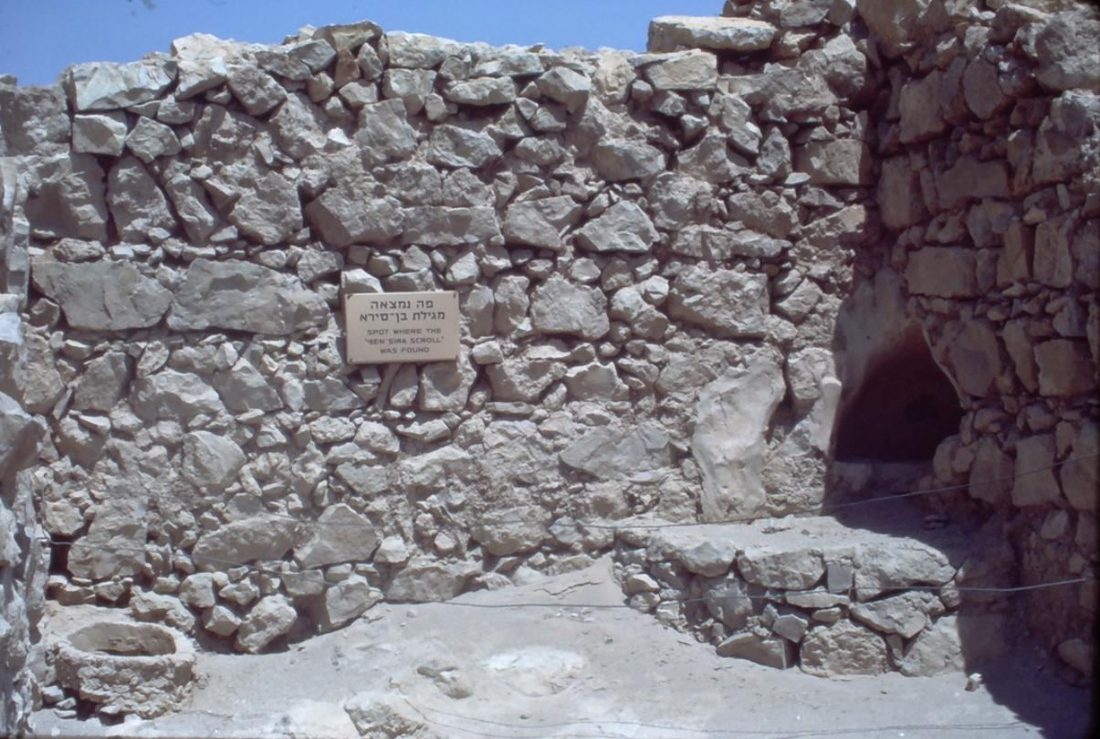
Baruch
- WRITTEN
- About 200 to 60 BC, maybe partly in Hebrew. It survives in Greek.
- WHO READS IT
- Catholic, Orthodox and Ethiopian Bibles.
- SET IN
- Babylon, 582 BC, five years after Jerusalem burned, 1:2.
Baruch was Jeremiah's real secretary, Jeremiah 36:4. This book claims to be his letter from Babylon. It has a prayer confessing Israel's sins, a lot like Daniel 9, a poem saying God's wisdom is His law, and words of comfort for Jerusalem.
THE PROBLEMS. Baruch borrows heavily from Daniel's prayer in Daniel 9, which is set in 539 BC, more than 40 years after Baruch says he wrote. Do not mix it up with 2 Baruch, 3 Baruch or 4 Baruch, which are three other books.
Read Baruch →Letter of Jeremiah
- WRITTEN
- About 300 to 100 BC. A piece of it in Greek was found in Dead Sea Scroll Cave 7.
- WHO READS IT
- Catholic, Orthodox and Ethiopian Bibles. Catholic Bibles print it as Baruch chapter 6.
- SET IN
- The exile in Babylon, after 597 BC.
It warns the exiles not to worship the idols of Babylon. They cannot speak, see or save. It sounds a lot like Jeremiah 10.
WHY IT IS NOT SCRIPTURE. The real Jeremiah 29 is a letter to the exiles, but this is not that letter. It was written centuries later in Jeremiah's name.
Read Letter of Jeremiah →Prayer of Azariah
- WRITTEN
- About 200 to 100 BC. It survives in Greek.
- WHO READS IT
- Catholic, Orthodox and Ethiopian Bibles. Catholic Bibles print it as Daniel 3:24 to 90.
- SET IN
- The fiery furnace of Daniel 3.
A long prayer and song inside the furnace. Azariah, who is Abednego, confesses Israel's sins, and then all three young men sing, Bless the Lord, all works of the Lord. Churches still sing it as the Benedicite.
WHY IT IS NOT SCRIPTURE. It is not in the Hebrew Daniel. It was added to the Greek Daniel centuries after the story.
Read Prayer of Azariah →Susanna
- WRITTEN
- About 200 to 100 BC. It survives in Greek.
- WHO READS IT
- Catholic, Orthodox and Ethiopian Bibles. Catholic Bibles print it as Daniel 13.
- SET IN
- Babylon, in Daniel's youth.
Two old judges try to force a godly wife named Susanna to sleep with them, and when she refuses they accuse her of adultery. Young Daniel questions them one at a time: under what tree did you see it? One says a mastic tree, the other a holm oak, and their lie falls apart.
THE PROBLEM. Around AD 240 a Christian scholar named Julius Africanus pointed out that the story is built on Greek puns about those trees, so it was likely written in Greek, not by Daniel.
Read Susanna →Bel and the Dragon
- WRITTEN
- About 200 to 100 BC. It survives in Greek.
- WHO READS IT
- Catholic, Orthodox and Ethiopian Bibles. Catholic Bibles print it as Daniel 14.
- SET IN
- Babylon, under King Cyrus.
Daniel proves the priests of the idol Bel are eating its food by spreading ashes on the floor. In the morning there are footprints. Then he kills a dragon the Babylonians worship by feeding it cakes of tar, fat and hair, and he is thrown to the lions again. The prophet Habakkuk is carried by an angel by his hair to bring him lunch.
WHY IT IS NOT SCRIPTURE. It is not in the Hebrew Daniel. It reads like a pair of folk tales that mock idols, and the church has always told it that way.
Read Bel and the Dragon →1 Maccabees
- WRITTEN
- About 100 BC, in Hebrew. Only the Greek survives.
- WHO READS IT
- Catholic and Orthodox Bibles. The Ethiopian Bible has the Meqabyan books instead.
- SET IN
- 175 to 134 BC.
The best history book of the quiet years. Antiochus IV outlaws circumcision and the Sabbath and sets up the abomination on the temple altar in 167 BC, 1:54. The old priest Mattathias refuses to sacrifice to idols and flees to the hills with his five sons.
THE ROOT OF HANUKKAH. In 164 BC Judas cleans the temple and dedicates a new altar with eight days of celebration, and the people decide to keep the feast every year, 4:52 to 59. That is the Feast of Dedication, and Jesus was in the temple for it, John 10:22. The famous oil that lasted eight days is not in Maccabees. That story comes from the Talmud, centuries later.
WHY IT IS NOT SCRIPTURE. It is careful history, and it never claims to be more. It says there was no prophet in its day and that the people were waiting for one, 4:46, 9:27 and 14:41.
Read 1 Maccabees →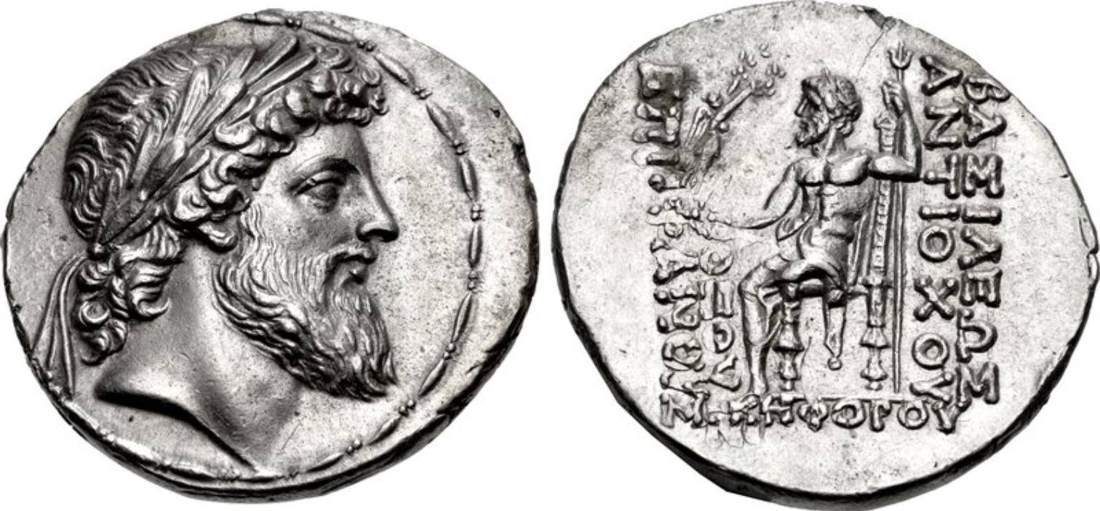
2 Maccabees
- WRITTEN
- About 124 to 63 BC, in Greek. It is a short version of a five book history by Jason of Cyrene, 2:23.
- WHO READS IT
- Catholic and Orthodox Bibles.
- SET IN
- About 180 to 161 BC.
It covers some of the same years as 1 Maccabees, with more miracles and more preaching. In chapter 3 a heavenly horseman stops an official named Heliodorus from robbing the temple. A stone letter naming him is in the Israel Museum.
THE MARTYRS. An old teacher named Eleazar dies rather than pretend to eat pork, chapter 6. A mother watches her seven sons die one by one rather than break God's law, and then dies herself, chapter 7.
2 MACCABEES 12 AND PURGATORY. After a battle, Judas finds idol charms under the clothes of his dead soldiers. He sends an offering to Jerusalem for a sin offering, so that they might be set free from their sin, 12:39 to 46. The Catholic Church points to this passage as support for praying for the dead and for its teaching on purgatory. Protestants answer that the passage does not mention purgatory, that these men died in the sin of idolatry, and that the book is not Scripture. Hebrews 9:27 says it is appointed for man to die once, and after that the judgment.
THE WRITER'S OWN WORDS. He ends, If it is well told, that is what I wanted. If it is poorly done, it was the best I could do, 15:38. A prophet speaking for God does not talk like that.
Read 2 Maccabees →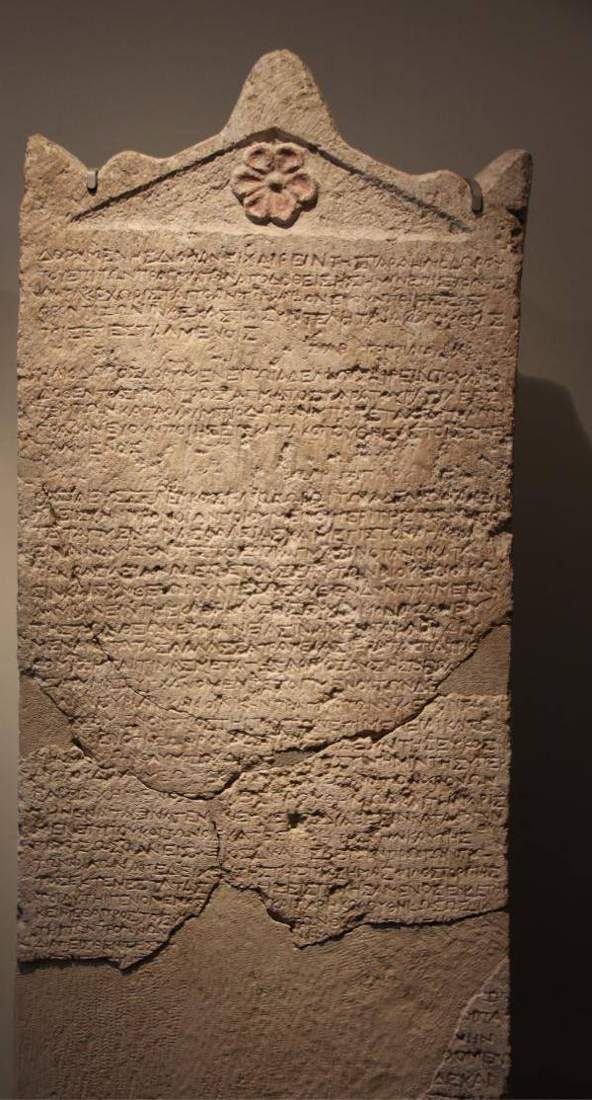
Also in Orthodox Bibles
Orthodox Bibles have the 12 books above, plus these 6. The list differs a little from church to church. Greek Bibles print 4 Maccabees in an appendix, and 2 Esdras is mainly in Russian and Slavonic Bibles. 1 Esdras, 2 Esdras and the Prayer of Manasseh were also in the 1611 King James Apocrypha.
3 Maccabees
- WRITTEN
- About 100 to 30 BC, in Greek, probably in Egypt.
- WHO READS IT
- Orthodox Bibles.
- SET IN
- About 217 BC.
Despite its name, it is not about the Maccabees. It is set 50 years before them. King Ptolemy IV of Egypt wins a battle at Raphia in 217 BC and tries to walk into the Holy of Holies in Jerusalem. God strikes him down.
WORTH KNOWING. The battle of Raphia really happened. The rest is a story of God protecting His people far from home, a lot like Esther.
Read 3 Maccabees →4 Maccabees
- WRITTEN
- About AD 20 to 100, in Greek.
- WHO READS IT
- Printed in an appendix in Greek Orthodox Bibles. It is in Codex Sinaiticus and Codex Alexandrinus.
- WHAT IT IS
- A sermon about the martyrs of 2 Maccabees 6 to 7.
It reads like a speech. Its big idea is that reason, guided by God's law, can master the passions.
WORTH KNOWING. Early Christians loved this book in times of persecution. It praises the martyrs' blood as a ransom for the nation, 17:21 to 22, an idea the New Testament says only Jesus fulfills, Mark 10:45.
Read 4 Maccabees →1 Esdras
- WRITTEN
- About 150 to 100 BC, in Greek.
- WHO READS IT
- Orthodox and Ethiopian Bibles. Catholics keep it in an appendix, called 3 Esdras.
- SET IN
- About 622 to 458 BC.
Esdras is the Greek form of Ezra. This book retells the end of 2 Chronicles, most of Ezra and part of Nehemiah, from King Josiah's Passover to Ezra reading the law.
THE NEW PART. Its one big new story is a contest between three bodyguards of King Darius. Which is strongest: wine, the king or women? The third, Zerubbabel, adds truth and wins. Truth is great and stronger than all things, 4:35. As his prize, he asks Darius to let the Jews rebuild Jerusalem.
THE PROBLEM. It mixes up the order of the Persian kings, and the contest story is not in Ezra.
Read 1 Esdras →Prayer of Manasseh
- WRITTEN
- Sometime between about 200 BC and AD 50, likely in Greek.
- WHO READS IT
- Orthodox Bibles. The Ethiopian Bible prints it inside 2 Chronicles. Catholics keep it in an appendix.
- SET IN
- King Manasseh in chains, about 680 to 648 BC.
Manasseh was Judah's most evil king. 2 Chronicles 33:12 to 13 says that when the Assyrians dragged him away, he humbled himself and prayed, and God brought him home. This 15 verse prayer was written to fill that gap.
WORTH KNOWING. It is one of the most beautiful prayers of repentance ever written. I bend the knee of my heart. No one is too far gone for God's mercy, 1 John 1:9.
WHY IT IS NOT SCRIPTURE. The real prayer was lost. This one was written hundreds of years later to imagine what he said. It is a good prayer, but it is not Manasseh's.
Read Prayer of Manasseh →Psalm 151
- WRITTEN
- Before about 200 BC, many think. A longer Hebrew form is in a Dead Sea Psalms scroll.
- WHO READS IT
- Orthodox and Ethiopian Bibles.
- SET IN
- David's youth, 1 Samuel 16 to 17.
A short psalm in David's voice. He was the smallest of his brothers and kept his father's sheep. He made a harp, was anointed, and beat Goliath with the giant's own sword.
WHY IT IS NOT SCRIPTURE. The Hebrew Bible ends at 150. Even the Greek Bible's heading calls this psalm outside the number. The Owner's Manual prints it in brackets at the end of Psalms, so you can read it there too.
Read Psalm 151 →2 Esdras
- WRITTEN
- Chapters 3 to 14 about AD 100, by a Jewish writer. Chapters 1, 2, 15 and 16 were added later by Christians. The full book survives only in Latin.
- WHO READS IT
- The Ethiopian Bible counts chapters 3 to 14 as Ezra Sutuel. Russian Orthodox Bibles print it as 3 Esdras. Catholics keep it in an appendix as 4 Esdras.
- SET IN
- 557 BC, thirty years after Jerusalem fell, 3:1.
Ezra sits in Babylon and argues with God. Why did He let wicked Babylon destroy His people? Babylon is really a code name for Rome, which had just burned the temple in AD 70.
THE PROBLEM. It was written about AD 100, 500 years after Ezra. It says the Messiah will reign 400 years and then die, 7:28 to 29, which the Bible never teaches. And it says Ezra rewrote the whole lost Bible by dictating 94 books in 40 days, 24 for everyone and 70 kept secret, 14:44 to 46.
Read 2 Esdras →Also in the Ethiopian Bible
The Ethiopian Orthodox Tewahedo Church has the biggest Bible in the world, 81 books. Ethiopia was far from Rome and Constantinople, and it kept books the rest of the church let go. It has most of the books above, with the Prayer of Manasseh inside 2 Chronicles, plus these. The first three are in its Old Testament.
The other four belong to its broader way of counting to 81. The Sinodos counts as four books, the Book of the Covenant as two, Ethiopic Clement as one and the Didascalia as one. Those eight are added to the New Testament. Josippon, a history of the Jews, can be counted with the Old.
1 Enoch
- WRITTEN
- In parts, from about 300 BC to near the time of Jesus, in Aramaic. The full book survives only in Ge'ez, the old Ethiopian language.
- WHO READS IT
- The Ethiopian Bible. Pieces were found in the Dead Sea Scrolls.
- SET IN
- Before the Flood, Genesis 5.
Enoch walked with God and was taken, Genesis 5:24. This book claims to be his visions. It tells how 200 fallen angels called Watchers came down, married women and fathered giants, the Nephilim of Genesis 6:4.
WORTH KNOWING. Jude 14 to 15 quotes 1 Enoch 1:9 and says Enoch prophesied. 2 Peter 2:4 and Jude 6 speak of angels kept in chains for judgment, which sounds like 1 Enoch too.
WHY IT IS NOT SCRIPTURE. Enoch did not write it. It was written thousands of years after him, by several writers over 300 years. Jews never put it in their Bible, and Jesus never quoted it. Jude quoting one line shows that line is true, not that the whole book is.
Read 1 Enoch →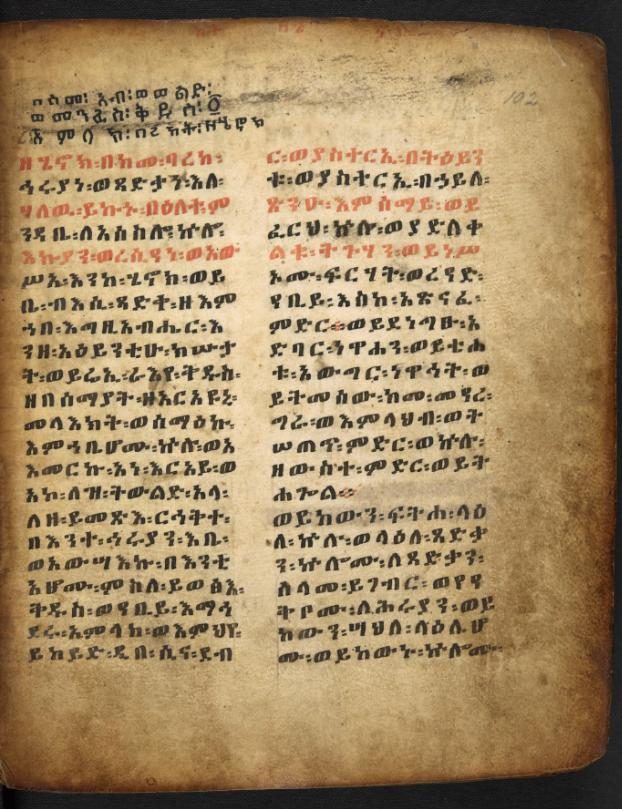
Jubilees
- WRITTEN
- About 160 to 150 BC, in Hebrew. Pieces of about 15 copies were found in the Dead Sea Scrolls. The full book survives in Ge'ez.
- WHO READS IT
- The Ethiopian Bible.
- SET IN
- Mount Sinai. An angel tells Moses the story from creation to the Exodus.
It retells Genesis and the start of Exodus, and it divides all of history into jubilees, blocks of 49 years. It says the patriarchs kept the law of Moses long before Sinai.
WHY IT IS NOT SCRIPTURE. It adds many details Genesis does not have, and it was written more than 1,000 years after Moses.
Read Jubilees →4 Baruch
- WRITTEN
- About AD 100 to 135, after the temple was destroyed.
- WHO READS IT
- The Ethiopian Bible, as the Rest of the Words of Baruch. Also called the Paralipomena of Jeremiah.
- SET IN
- The fall of Jerusalem, 586 BC, and the return.
Before Jerusalem falls, Jeremiah sends his friend Abimelech, the Ebed Melech of Jeremiah 38, out to pick figs. Abimelech sits under a tree and falls asleep for 66 years. When he wakes, the figs are still fresh. It is a sign that God keeps His people safe until He brings them home.
WHY IT IS NOT SCRIPTURE. It was written more than 600 years after Jeremiah, after Jesus, and its ending was shaped by Christians.
Read 4 Baruch →Sinodos
- WRITTEN
- Its pieces about AD 215 to 400, in Greek, in Rome, Egypt and Syria. They were joined in Egypt and passed through Coptic and Arabic into Ge'ez.
- WHO READS IT
- The Ethiopian church, as four of the eight extra books in its broader New Testament. No other church.
- WHAT IT IS
- A rule book for running a church.
It claims the twelve apostles met and gave these rules. Really it is several older church rule books stitched together. It opens with the Two Ways, the same teaching that starts the Didache, with each apostle taking a turn.
WHY IT IS NOT SCRIPTURE. The apostles died in the first century, and these rules came 150 to 350 years later. The writer even lists Peter and Cephas as two apostles, 2:1, though Cephas is just Peter's Aramaic name, John 1:42.
Read Sinodos →Book of the Covenant
- WRITTEN
- Two books joined as one. The Testament of Our Lord in the 400s, likely in Syria or Asia Minor. The Epistle of the Apostles about AD 150.
- WHO READS IT
- The Ethiopian church, in its broader collection, as rules for church life. No other church.
- WHAT IT IS
- A church rule book and a letter, both told as words of the risen Jesus.
In part one, Jesus has just risen. He warns the apostles about the end, and then He lays out a church building, the bishop, the Lord's Supper and baptism in great detail. In part two, the eleven write a letter retelling His miracles, the cross and the resurrection, and they warn against the false teachers Simon and Cerinthus.
THE GIVEAWAY. Part one describes a church with a baptistery, a deacons' house and a guesthouse, 19:2 to 22. That is church life of the 300s and 400s, not of Acts. Part two lists Peter and Cephas as two different men, 76:1, which no apostle would do.
Read Book of the Covenant →Ethiopic Didascalia
- WRITTEN
- About AD 380 in Syria, from an older book of about AD 230. Later shortened and put into Ge'ez.
- WHO READS IT
- The Ethiopian church, in its broader Bible of 81 books. No other church.
- WHAT IT IS
- A church handbook in the voice of the apostles.
Its big theme is mercy. God does not want the death of a sinner, so the church must take back everyone who repents, the way God took back Manasseh.
WHY IT IS NOT SCRIPTURE. It claims the apostles, with Paul and James, met in Jerusalem and wrote it, and it even has Matthew sign his name, 9:13. It was written 150 to 300 years after them. Protestant readers will also notice it lifts the bishop higher than the New Testament does.
Read Ethiopic Didascalia →Josippon
- WRITTEN
- About AD 950, in Hebrew, in southern Italy. One of the two books on this shelf written after AD 400.
- WHO READS IT
- The Ethiopian church lists its Ge'ez form, Zena Ayhud, the History of the Jews, in its broader 81. No other church.
- SET IN
- From the Greek kings and the Maccabees to the fall of Jerusalem in AD 70.
Josippon is the history of the Second Temple, told in Hebrew for medieval Jews who had no such history in their own language. It walks through the Maccabees, the coming of Rome and the bloody house of Herod, then slows down for the great revolt.
WORTH KNOWING. It never claims to be Scripture. It is a history book. Medieval readers took it for the work of Josephus, but it was written nearly 900 years after the events. Read it as history, and build doctrine on the 66.
Read Josippon →WHAT IS NOT HERE. Two Ethiopian books are not in this library. The Ethiopian Bible has 1, 2 and 3 Meqabyan in place of the Greek Maccabees. Meqabyan is the Ethiopian word for Maccabees, but these are different books, written in Ethiopia in the Middle Ages, many scholars think. There is no free English translation to work from, so they are not included. The same goes for Ethiopic Clement, a church book from the early Middle Ages.
Other Ancient Books, Oldest First
No church counts these 39 books in its Bible today. They are here, oldest first, because they show what Jews and Christians were reading, praying and arguing about from the days of the Maccabees to the age of Athanasius.
Letter of Aristeas
- WRITTEN
- About 150 to 100 BC, in Greek, in Alexandria, Egypt.
- WHO REALLY WROTE IT
- Not Aristeas, a Greek officer of King Ptolemy II. An unknown Jew of Alexandria, writing about a hundred years later.
- WHAT IT IS
- The story of how the Septuagint was made.
The king of Egypt wants the Jewish law for his great library. He frees a hundred thousand Jewish slaves as a goodwill gift and sends to Jerusalem for translators. The high priest sends 72 wise elders.
WORTH KNOWING. This is where the name Septuagint, the seventy, comes from. But the writer makes mistakes a real courtier would not. The librarian Demetrius served the king's father and fell from favor when Ptolemy II took the throne.
Read Letter of Aristeas →Testaments of the Twelve Patriarchs
- WRITTEN
- The finished book about AD 150 to 200, in Greek. Parts go back much earlier, maybe to about 100 BC.
- WHO REALLY WROTE IT
- Not Jacob's twelve sons. Either a Christian shaped it from older Jewish material, or Christians edited a Jewish book. Scholars still argue.
- WHAT IT IS
- Twelve deathbed speeches, one from each son of Jacob.
Each of Jacob's twelve sons gives a deathbed speech.
WORTH KNOWING. The moral teaching is often beautiful. Love your brother, forgive from the heart, love God and your neighbor. Some of it may be Christian. It speaks of the Savior of the world and the torn veil of the temple, 26:2 to 3.
Read Testaments of the Twelve Patriarchs →Psalms of Solomon
- WRITTEN
- After 63 BC, in Jerusalem, likely in Hebrew. It survives in Greek and Syriac.
- WHO REALLY WROTE IT
- Not Solomon. Devout Jews in Jerusalem after the Roman general Pompey took the city. Scribes added Solomon's name later.
- WHAT IT IS
- A hymnbook of 18 psalms.
18 psalms from the generation before Jesus. Rome has walked into the temple, and the poets say God was right to let it happen, because His own kings and priests sinned worse than the nations.
WORTH KNOWING. Psalms 17 and 18 give the clearest picture we have of the Messiah many Jews were waiting for. A Son of David who drives out the Gentiles and rules Israel in holiness. No wonder a crowd once tried to make Jesus king by force, John 6:15.
Read Psalms of Solomon →Apocryphon of Ezekiel
- WRITTEN
- About 50 BC to AD 50. 1 Clement quotes it about AD 96.
- WHO REALLY WROTE IT
- Not Ezekiel. An unknown Jewish writer five centuries or more after him.
- WHAT IT IS
- Five quotes from a lost book. No full copy survives.
The best scrap is a parable. A lame man and a blind man team up to wreck a king's garden. Each says he could not have done it. So the king puts the lame man on the blind man's back and judges them together. The point is that body and soul sin together, so they will be raised and judged together.
Read Apocryphon of Ezekiel →Joseph and Aseneth
- WRITTEN
- About 100 BC to AD 100, in Greek, likely in Egypt. A few scholars say later.
- WHO REALLY WROTE IT
- Unknown. The book never claims Joseph or Aseneth wrote it. It is a story about them.
- WHAT IT IS
- A love story about Joseph's Egyptian wife.
Genesis 41:45 says Pharaoh gave Joseph a wife, Asenath, the daughter of a priest of On. This book tells the love story. Aseneth scorns Joseph until she sees him. He will not kiss a woman who kisses idols. So she smashes her gods, fasts seven days in ashes and turns to the God of the Hebrews.
WORTH KNOWING. An angel feeds her a honeycomb from paradise and renames her City of Refuge. It also speaks of the bread of life, words that sound a lot like John 6.
Read Joseph and Aseneth →Testament of Job
- WRITTEN
- About 100 BC to AD 100, in Greek, likely in Egypt.
- WHO REALLY WROTE IT
- Not Job, and not his brother Nahor, who the story says wrote it down. An unknown Jewish writer.
- WHAT IT IS
- Job's story, retold as his deathbed speech.
Job tells his ten children his own story. As a rich king he tears down an idol of Satan, and Satan strikes back. He even buys the hair of Job's wife Sitis for three loaves of bread. Job will not curse God, and Satan finally admits he has been pinned like a beaten wrestler.
WORTH KNOWING. The Bible gives Job's wife one line. This book gives her and Job's daughters whole chapters. It rings with the patience James praised, James 5:11.
Read Testament of Job →Testament of Moses
- WRITTEN
- About AD 7 to 30, in Judea, in Hebrew or Aramaic. One damaged Latin copy survives.
- WHO REALLY WROTE IT
- Not Moses. An unknown Jewish writer about 1,300 years after him.
- WHAT IT IS
- Moses' farewell speech to Joshua.
Moses, 120 years old, tells Joshua the whole future of Israel: the land, the exile, the return, the corrupt priests, Herod and his sons, and Rome. Then God's kingdom comes and Satan is no more.
WORTH KNOWING. Jude 9 tells of Michael arguing with the devil over the body of Moses. Early writers said that story came from this book's lost ending.
Read Testament of Moses →2 Enoch
- WRITTEN
- Most say the first century AD, before AD 70, likely in Egypt. Some say much later.
- WHO REALLY WROTE IT
- Not Enoch. An unknown Jew who spoke Greek.
- WHAT IT IS
- A tour of seven heavens. It survives only in Old Slavonic.
Two angels carry Enoch up through seven heavens. He sees rebel angels waiting for judgment, paradise with the tree of life, and a place of fire and ice. In the seventh heaven God tells him secrets He never told the angels, like how He made the world from nothing.
WORTH KNOWING. It helps you picture what Paul meant by the third heaven, 2 Corinthians 12:2 to 4.
Read 2 Enoch →Apocalypse of Moses and Life of Adam and Eve
- WRITTEN
- First told in Greek, around AD 100 to 300. The Apocalypse of Moses is the Greek telling. The Life of Adam and Eve is a later Latin telling of the same story.
- WHO REALLY WROTE IT
- Unknown, most likely a Jewish storyteller, with Christian lines added. Moses is not in the story at all. The title comes from a later heading.
- WHAT IT IS
- Two tellings of what happened after Eden.
Adam is 930 and dying. He sends Eve and Seth to the gates of paradise for oil from the tree of mercy. The angel Michael tells them it is saved for the resurrection at the end of time. Adam dies, God forgives him, and his soul is carried to paradise.
WORTH KNOWING. The Latin book adds a famous legend. The devil says he was thrown out of heaven because he refused to bow to Adam, the image of God. You will not find that in the Bible.
Read Apocalypse of Moses → Read Life of Adam and Eve →Apocalypse of Abraham
- WRITTEN
- About AD 80 to 100, after the temple fell, likely in Hebrew. It survives only in Old Slavonic.
- WHO REALLY WROTE IT
- Not Abraham. An unknown Jewish writer about two thousand years after him.
- WHAT IT IS
- A story and a vision. It survives only in Old Slavonic.
The first half is funny. Young Abraham works in his father's idol shop. A stone god loses its head, and a wooden god burns up while watching the stove. Abraham reasons his way to the God who made them all. The second half retells Genesis 15. The angel Jaoel guides Abraham up to God's throne, while the devil Azazel tries to scare him off.
WORTH KNOWING. It was written for Jews grieving the burned temple and asking how long. Its answer is that evil has a time limit.
Read Apocalypse of Abraham →Didache
- WRITTEN
- About AD 50 to 120, probably in Syria. One full copy survives, found in 1873.
- WHO REALLY WROTE IT
- Not the twelve apostles, though the title names them. Unknown church leaders gathered it.
- WHAT IT IS
- The oldest church handbook we have.
Chapters 1 to 6 teach the Two Ways, life and death, a crash course in living like Jesus for new believers. Then it tells how to baptize, when to fast, to pray the Lord's Prayer three times a day, and what to pray at the Lord's Supper.
WORTH KNOWING. It has a famous test for traveling preachers. If he stays three days, he is a fake. If he asks for money, he is a fake. It also forbids abortion by name, 2:2.
Read Didache →1 Clement
- WRITTEN
- About AD 95 to 97, in Rome.
- WHO REALLY WROTE IT
- The church in Rome. From the 100s on, Christians said Clement, a leader there, wrote it. The letter never names him.
- WHAT IT IS
- A letter from the church in Rome to the church in Corinth.
A few people in Corinth had thrown out their elders. The church in Rome writes to say, put them back. It teaches that we are made right with God by faith, not by our own works, 32:4.
WORTH KNOWING. It is one of the oldest Christian writings outside the New Testament. It tells of Peter and Paul dying for the faith, chapter 5. And Clement points his readers back to the apostles. He never claims to be one. Codex Alexandrinus, from the 400s, copied it right after Revelation.
Read 1 Clement →2 Baruch
- WRITTEN
- About AD 95 to 120, after Rome burned the temple, likely in Hebrew. It survives whole in one Syriac Bible from the 500s or 600s.
- WHO REALLY WROTE IT
- Not Baruch, Jeremiah's scribe. An unknown Jewish teacher six hundred years later.
- WHAT IT IS
- A book of visions about grief and the end.
Baruch watches angels tear down Jerusalem's walls before the enemy gets in. Then he grieves and argues with God about why the righteous suffer, and God answers with visions of the end.
WORTH KNOWING. It is the twin of 2 Esdras, written in the same years for the same grief. Babylon in it is a code name for Rome, the way 1 Peter 5:13 uses it.
Read 2 Baruch →Ascension of Isaiah
- WRITTEN
- About AD 100 to 120 for the Christian parts. The Jewish story of Isaiah's death may be older.
- WHO REALLY WROTE IT
- Not Isaiah. Unknown Christians, using an older Jewish story.
- WHAT IT IS
- A martyr story and a vision. The whole book survives only in Ge'ez.
Part one tells how wicked King Manasseh had Isaiah sawn in two with a wooden saw. Hebrews 11:37 says some of the faithful were sawn in two, and this is the old story behind that line. Part two is Isaiah's vision. An angel carries him up through seven heavens, and he watches the Lord come down in secret, be born, be crucified, rise and go back up.
THE PROBLEM. It calls the Holy Spirit the angel of the Holy Spirit and shows Him worshiping the Father, 9:35 to 40. The Bible never makes the Spirit an angel.
Read Ascension of Isaiah →Testament of Abraham
- WRITTEN
- About AD 100, in Greek, likely in Egypt.
- WHO REALLY WROTE IT
- Unknown. It is a story about Abraham and never claims he wrote it.
- WHAT IT IS
- A story about the day Abraham was supposed to die.
God sends the archangel Michael to tell Abraham it is time to die. Michael cannot bring himself to say it, and Abraham keeps saying no. He gets a tour of the world, grows so angry at sinners that he calls down death on them, and is shown the judgment of souls instead. There he learns mercy. At last God sends Death itself, and even the friend of God has to go.
Read Testament of Abraham →The Seven Letters of Ignatius
- WRITTEN
- About AD 107 to 110, on the road to Rome. Four from Smyrna, three from Troas.
- WHO REALLY WROTE IT
- Really Ignatius, bishop of Antioch in Syria. Polycarp, who met him on the trip, speaks of his letters, Polycarp to the Philippians 13.
- WHAT IT IS
- Seven letters from a bishop on his way to die.
Ignatius led the church in Antioch, where believers were first called Christians, Acts 11:26. Soldiers marched him to Rome to die in the arena. On the way he wrote to the Ephesians, the Magnesians, the Trallians, the Romans, the Philadelphians, the Smyrnaeans and his friend Polycarp.
WHAT HE SAYS. Stick together with your bishop, elders and deacons. Jesus was truly born, truly crucified and truly raised, against teachers who said He only seemed to have a body. To the Magnesians: do not just be called Christians, be Christians. To the Romans: please do not rescue me. He calls himself God's wheat, ground into bread for Christ.
WORTH KNOWING. To the Smyrnaeans he is the first writer we know to call the church catholic, which means universal. Protestant readers will notice how high he lifts the bishop. Ignatius himself knew the line. He says he does not give orders like Peter and Paul, because they were apostles and he is a convict.
Read Ignatius to the Ephesians → Read Ignatius to the Magnesians → Read Ignatius to the Trallians → Read Ignatius to the Romans → Read Ignatius to the Philadelphians → Read Ignatius to the Smyrnaeans → Read Ignatius to Polycarp →Polycarp to the Philippians
- WRITTEN
- About AD 110 to 115, in Smyrna, on the west coast of modern Turkey.
- WHO REALLY WROTE IT
- Really Polycarp. He names himself, and his student Irenaeus praised the letter about AD 180.
- WHAT IT IS
- A pastor's letter to the church at Philippi.
Polycarp was pastor of Smyrna, one of the seven churches of Revelation 2. The early church said the apostle John trained him. The Philippians asked him for advice and for copies of the letters of Ignatius. He sent both.
WORTH KNOWING. He stitches his letter together from Paul, Peter and the words of Jesus. A man who knew apostles points you to their words, not his own. You are saved by grace, so live like it.
Read Polycarp to the Philippians →Apology of Aristides
- WRITTEN
- About AD 125, in Athens. Some say about AD 140.
- WHO REALLY WROTE IT
- Really Aristides, a philosopher of Athens. Eusebius and Jerome both name him.
- WHAT IT IS
- A defense of the faith, given to the Roman emperor.
Apology here does not mean sorry. It means a defense, like a lawyer's case. Aristides sorts the human race into Barbarians, Greeks, Jews and Christians, and tests what each one worships. Only the Christians, he says, have found the truth.
WORTH KNOWING. His picture of Christian life is a gem. They do not commit adultery, they do not lie, they care for widows and orphans, and when a stranger comes they take him home like a brother. The book was lost for over a thousand years until a Syriac copy turned up at Mount Sinai in 1889.
Read Apology of Aristides →Odes of Solomon
- WRITTEN
- About AD 100 to 125, likely in Syria.
- WHO REALLY WROTE IT
- Not Solomon. An unknown Christian poet. No Ode names Solomon. The name came from old copies that put the Odes after the Psalms of Solomon.
- WHAT IT IS
- 42 early Christian worship songs.
42 short worship songs, the oldest Christian hymnbook we have. They picture the Lord as a crown, a river and a harp played by the Spirit. One sees the cross in a believer's arms stretched out in prayer.
WORTH KNOWING. They were lost for a thousand years until J. Rendel Harris found a Syriac copy in 1909. Ode 2 is still missing.
Read Odes of Solomon →Epistle of Barnabas
- WRITTEN
- Between AD 70 and 135, most likely about AD 130, probably in Alexandria.
- WHO REALLY WROTE IT
- Not Paul's partner Barnabas. The letter never names its writer. The name came later.
- WHAT IT IS
- A teaching paper on how to read the Old Testament.
The writer finds Jesus and the cross all over the Old Testament: in the two goats of the Day of Atonement, in Abraham's 318 men and in Moses' arms lifted in battle.
THE PROBLEM. He says the Jews never understood their own law, because God never meant it to be kept as written. Paul never says that. Paul says the law is holy, Romans 7:12, and that God has not rejected His people, Romans 11:1.
Read Epistle of Barnabas →Apocalypse of Peter
- WRITTEN
- About AD 100 to 150. This short Greek piece was found at Akhmim, Egypt, in 1886 to 1887.
- WHO REALLY WROTE IT
- Not Peter, who died in the 60s. An unknown Christian in his name.
- WHAT IT IS
- A tour of heaven and hell, in a short Greek fragment.
The Lord takes the twelve to a mountain, and two men appear, shining like the sun. Peter asks to see where the righteous are. He sees a land of light, and a dark place where each punishment fits the sin.
WORTH KNOWING. It is the oldest Christian tour of heaven and hell. TOM prints it twice. This is the short Greek fragment. The longer Ethiopic version comes next.
Read Apocalypse of Peter →Ethiopic Apocalypse of Peter
- WRITTEN
- About AD 100 to 150, first in Greek. The whole book survives only in Ge'ez.
- WHO REALLY WROTE IT
- Not Peter. The same unknown Christian writer as the Greek piece.
- WHAT IT IS
- The longer form of the Apocalypse of Peter, in Ge'ez.
This is the longer and fuller form, and most scholars think it is closer to the first book. It opens on the Mount of Olives, where the disciples ask for the signs of His coming, as in Matthew 24. Then Jesus shows Peter the last day. The dead rise, fire swallows the world, and everyone passes through a river of fire.
WORTH KNOWING. The lost beg for mercy, and it is too late. But Peter did not write it, and the church let it go.
Read Ethiopic Apocalypse of Peter →Shepherd of Hermas
- WRITTEN
- In Rome, in stages, about AD 100 to 150.
- WHO REALLY WROTE IT
- Really a man named Hermas, a freed slave turned businessman. The Muratorian list says his brother Pius was bishop of Rome.
- WHAT IT IS
- Visions, commands and parables from Rome.
An aged woman, who turns out to be the Church, shows Hermas a tower being built out of living stones. Some stones fit. Some are thrown away. Then an angel dressed as a shepherd moves into his house and gives him twelve commands and ten parables.
WORTH KNOWING. Its big question: is there any hope for a believer who sinned after baptism? Its answer is yes, one more chance to repent. And the shepherd is not Jesus. He is the angel of repentance.
Read Shepherd of Hermas →3 Baruch
- WRITTEN
- Late first or second century AD. Some say Egypt, some say Syria.
- WHO REALLY WROTE IT
- Not Baruch. An unknown Jewish writer after AD 70, with Christian lines added later.
- WHAT IT IS
- A tour of five heavens.
Baruch weeps over Jerusalem, and an angel leads him up through five heavens. He sees the builders of Babel turned into beasts and the sun riding a chariot. In the fifth heaven Michael carries people's good deeds to God in a huge vessel.
WORTH KNOWING. Four books on this shelf carry Baruch's name: Baruch, 2 Baruch, 3 Baruch and 4 Baruch. Same famous name, four different writers.
Read 3 Baruch →2 Clement
- WRITTEN
- About AD 100 to 150. Nobody knows where.
- WHO REALLY WROTE IT
- Not Clement. An unknown church leader. It got Clement's name because it was copied right after 1 Clement.
- WHAT IT IS
- The oldest complete Christian sermon outside the New Testament.
It is not a letter at all. It is a sermon, read aloud after the Bible reading. Jesus saved you from a dead life, so do not coast. Confess Him by how you live. Repent now, while the clay is still soft on the potter's wheel. Keep your body pure, because it will rise.
WORTH KNOWING. It quotes a few sayings of Jesus that are not in our Gospels.
Read 2 Clement →Martyrdom of Polycarp
- WRITTEN
- Within a year of Polycarp's death in AD 155 or 156, at Smyrna.
- WHO REALLY WROTE IT
- Really the church at Smyrna, through a man named Evarestus, from eyewitnesses. The closing notes were added later.
- WHAT IT IS
- The oldest full story of a Christian martyr outside the New Testament.
Polycarp is 86. The Roman governor tells him to curse Christ and go free. Polycarp answers that he has served Christ 86 years and Christ never did him wrong, so how could he curse his King who saved him? Then he is burned alive.
WORTH KNOWING. The writers want you to see how his death followed the pattern of Jesus. He was betrayed by someone in his own house, arrested on a Friday and brought before a police chief named Herod.
Read Martyrdom of Polycarp →3 Corinthians
- WRITTEN
- About AD 160 to 180, in Asia, now western Turkey, as part of a story book called the Acts of Paul.
- WHO REALLY WROTE IT
- Not Paul. Tertullian says a church elder in Asia wrote the Acts of Paul out of love for Paul, and lost his office for it.
- WHAT IT IS
- Two letters inside a story about Paul.
Corinth writes to Paul about two teachers who say God did not make the world or the body, and that Jesus did not truly come in the flesh. Paul's reply, which he did not really write, answers well. One God made heaven and earth. Jesus was truly born of Mary from David's line. The real body will rise.
WORTH KNOWING. Its teaching is mostly sound, much of it borrowed from 1 Corinthians 15. The Armenian church kept it with Paul's letters for centuries. But Paul did not write it, and a borrowed name is still a borrowed name.
Read 3 Corinthians →Letter to Diognetus
- WRITTEN
- About AD 150 to 200. Chapters 11 and 12 may be later. The place is unknown.
- WHO REALLY WROTE IT
- Nobody knows, and the letter does not pretend to know.
- WHAT IT IS
- A defense of the faith, written to a curious pagan.
Diognetus asked smart questions about Christians, and this letter answers them. Its most famous part says Christians live like everyone else, but as foreigners here and citizens of heaven. What the soul is in the body, Christians are in the world.
WORTH KNOWING. Only one copy ever turned up. The story goes that it was found in Constantinople around 1436, about to be used as wrapping paper in a fish shop. That copy burned in a war in 1870.
Read Letter to Diognetus →Testaments of Isaac and Jacob
- WRITTEN
- Sometime from the 200s to the 400s AD, likely in Egypt. Jacob is probably the later of the two.
- WHO REALLY WROTE IT
- Not Isaac or Jacob. Unknown Christians in Egypt, writing sequels to the Testament of Abraham.
- WHAT IT IS
- Two feast day readings from the churches of Egypt.
In both, Michael comes to tell the patriarch his time is near, and this time there is no stalling. Isaac is shown the punishments of sinners and the joy of heaven. Jacob's story follows the last chapters of Genesis.
WORTH KNOWING. These are feast day readings. The sermon at the end of Jacob says it was preached by Athanasius, the famous bishop of Alexandria, but most scholars doubt he wrote it. Even that preacher tells you to go check Genesis, 6:2.
Read Testament of Isaac → Read Testament of Jacob →Testament of Solomon
- WRITTEN
- Around AD 300 in its present form, from older Jewish legends.
- WHO REALLY WROTE IT
- Not Solomon. An unknown writer in Greek more than a thousand years after him, with Christian lines added.
- WHAT IT IS
- A folk tale about Solomon and the demons.
An archangel gives Solomon a ring with God's seal. With it he calls up demon after demon, makes each one tell its name and the angel that defeats it, and puts them all to work building the temple.
WORTH KNOWING. It shows the world of demons, charms and star signs the first Christians lived in. Against that dark background, look at Jesus. He did not need a ring. He spoke a word, and demons left, Mark 1:25 to 27. We explain this book. We never teach its charms.
Read Testament of Solomon →Laodiceans
- WRITTEN
- Unknown, sometime from the 100s to the 400s. The oldest copy is from AD 546.
- WHO REALLY WROTE IT
- Not Paul. Someone stitched it together from Philippians, with an opening from Galatians.
- WHAT IT IS
- A short letter in Paul's name.
Colossians 4:16 tells the church to read the letter from Laodicea. That letter is lost, and this one tries to fill the gap. Lay it next to Philippians and you can see the seams, line after line in the same order Paul wrote them.
WORTH KNOWING. Its teaching agrees with Paul because it is Paul, copied. But a copy is not a letter from Paul. It sat in many Latin Bibles for about a thousand years, and Wycliffe's English Bible had it. But Jerome said in his day that everyone rejected it.
Read Laodiceans →So What Do We Do With Them?
Read them the way Martin Luther said to: useful and good to read, but not equal to Holy Scripture.
READ THEM FOR HISTORY. 1 Maccabees tells you why Jesus was in the temple at Hanukkah and how Daniel's prophecies came true. Ignatius and Polycarp show you what the church believed one lifetime after the apostles.
READ THEM FOR WISDOM. Sirach has good advice on money, friends and the tongue. The Prayer of Manasseh can teach you how to repent. The martyrs of 2 Maccabees and Polycarp can teach you courage.
DO NOT BUILD DOCTRINE ON THEM. No teaching should stand on a book Jesus never quoted as Scripture, that was not in the Bible of His people or written by His apostles, and that carries no prophecy of its own that came true. If a teaching needs Tobit or 2 Maccabees or the Shepherd to stand up, it is standing on sand.
Luther was right. Jesus said the Scriptures testify about Him, John 5:39, and He meant the Law, the Prophets and the Psalms. The apostles He sent wrote the rest. That is where more than a thousand prophecies wait and come true. So pick a book on this shelf and enjoy it. Then go back to the 66, where God speaks.
Read The Owner's Manual Apocrypha
Related questionWhy Do Some Bibles Have More Books?