
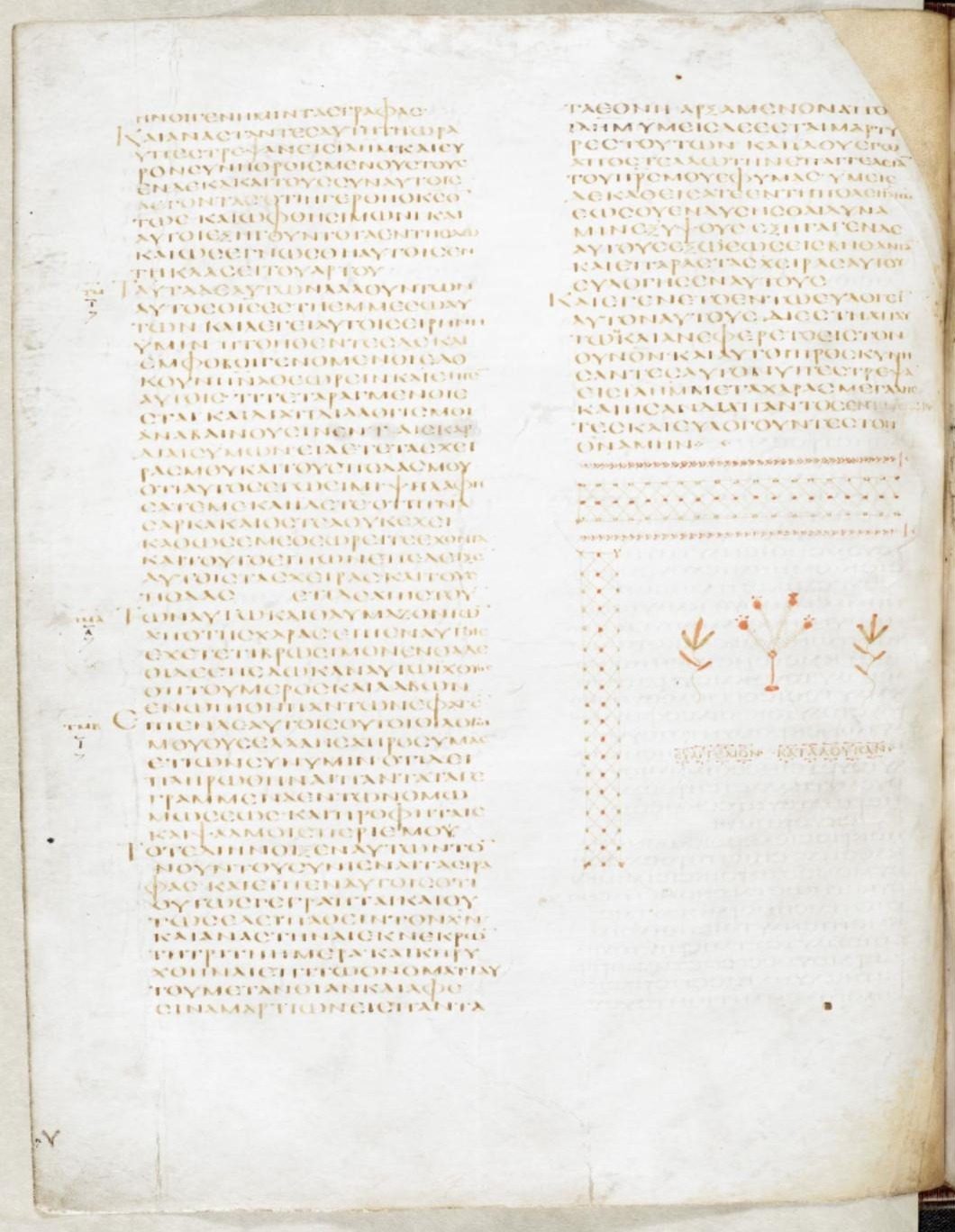
Letter to the Jews in Egypt// 1 Maccabees 4:52–59; John 10:22
1“The Jews in Jerusalem and in the land of Judea, to their Jewish brothers in Egypt: Greetings and good peace. 2May God do good to you, and may He remember His covenant with Abraham, Isaac, and Jacob, His faithful servants. 3May He give all of you a heart to worship Him and to do His will with a great heart and a willing soul. 4May He open your heart to His law and His commandments, and may He bring peace. 5May He hear your prayers, be reconciled to you, and not forsake you in a time of evil. 6Here and now we are praying for you.
- 2MAC 1:1[NOTE]TO THEIR JEWISH BROTHERS IN EGYPT. By now many Jews lived in Egypt, most of all in Alexandria, where the Old Testament had been put into Greek. Jews first fled to Egypt in Jeremiah's day, Jeremiah 43 to 44.
- 2MAC 1:3[HEART]A prayer that God would give His people a heart to worship Him and open their hearts to His law.
7“In the reign of Demetrius, in the year 169, we Jews wrote to you in the distress and the bitter crisis that came upon us in those years, after Jason and his followers revolted from the holy land and the kingdom. 8They set fire to the gateway and shed innocent blood. Then we prayed to the Lord, and He heard us. We offered sacrifice and fine flour, we lit the lamps, and we set out the loaves. 9So now see that you celebrate the days of the Feast of Tabernacles in the month of Chislev.
- 2MAC 1:7[NOTE]IN THE YEAR 169. The years in this book are counted from 312 BC, when the Seleucid kingdom began. Year 169 is about 143 BC. Jason is the man who bought the high priesthood, 4:7.
- 2MAC 1:8[NOTE]WE SET OUT THE LOAVES. The bread of the Presence, twelve loaves set before God every Sabbath, Leviticus 24:5 to 8. Lamps lit and bread on the table meant the temple was working again, 1 Maccabees 4:50 to 51.
Letter to Aristobulus// 1 Maccabees 6:1–16; 2 Maccabees 9:1–29
10“In the year 188.” “Those in Jerusalem and in Judea, the council of elders, and Judas, to Aristobulus, teacher of King Ptolemy, who is of the family of the anointed priests, and to the Jews in Egypt: Greetings and good health. 11Having been saved by God from great dangers, we give Him great thanks, as men who stood in battle against a king. 12For He Himself hurled out into Persia those who had drawn up for battle in the holy city. 13When the leader reached Persia with an army that seemed invincible, they were cut to pieces in the temple of Nanea, through a trick that the priests of Nanea used. 14For Antiochus came to the place with the friends who were with him, as though he were going to marry the goddess, in order to take its vast treasures as a dowry. 15The priests of the Nanea temple set the treasures out, and Antiochus went with a few men inside the wall of the sacred precinct. As soon as Antiochus entered, they shut the temple. 16Then they opened a secret door in the ceiling, threw stones, and struck down the leader as with a thunderbolt. They cut the bodies to pieces and threw the heads out to the people outside. 17Blessed in every way be our God, who has handed over the ungodly!
- 2MAC 1:10[NOTE]Hanukkah is called the Feast of Tabernacles in the month of Chislev here because it was celebrated for eight days with branches, like Tabernacles, 10:6.
- 2MAC 1:13[DEMONIC]A king dies robbing the temple of the goddess Nanea
- 2MAC 1:13[TEXT]This letter says Antiochus died in the temple of Nanea in Persia. Chapter 9 and 1 Maccabees 6 tell his death differently. Some think the letter is really about an earlier king, Antiochus III, who died robbing a temple in 187 BC.
Nehemiah and the Hidden Fire// Leviticus 6:12–13
18“Since we are about to celebrate the purification of the temple on the twenty-fifth day of Chislev, we thought it necessary to inform you, so that you too may celebrate the Feast of Tabernacles and the festival of the fire, from the time when Nehemiah, who built the temple and the altar, offered sacrifices. 19For when our fathers were being led away to Persia, the devout priests secretly took some of the fire from the altar and hid it in the hollow of a dry well. There they made it secure, so that the place was unknown to anyone. 20But after many years had passed, when it pleased God, Nehemiah, who had been sent by the king of Persia, sent the descendants of the priests who had hidden the fire to get it. 21When they reported to us that they had not found fire but a thick liquid, he ordered them to draw some out and bring it. When the sacrifices had been brought up, Nehemiah ordered the priests to sprinkle the liquid on the wood and on what lay on it. 22When this had been done and some time had passed, the sun, which had been hidden by clouds, shone out, and a great fire blazed up, so that everyone was amazed. 23While the sacrifice was being consumed, the priests offered a prayer, the priests and everyone with them. Jonathan led, and the rest responded, as did Nehemiah.
- 2MAC 1:18[NOTE]NEHEMIAH, WHO BUILT THE TEMPLE AND THE ALTAR. The letter mixes up its history. Jeshua and Zerubbabel rebuilt the altar and the temple, Ezra 3:2 and 6:15. Nehemiah came about 445 BC and rebuilt the walls, Nehemiah 2:17.
- 2MAC 1:19[NOTE]THE FIRE FROM THE ALTAR. God's law said the altar fire must never go out, Leviticus 6:13. This legend says priests hid some of it during the exile, so the new temple could use the same holy fire.
- 2MAC 1:20[MIRACLE]The hidden altar fire becomes a thick liquid and blazes up
The Prayer at the Sacrifice
24“The prayer went like this:
‘O Lord, Lord God, Creator of all things,
awesome and mighty, righteous and merciful,
the only King, the only gracious One,
- 2MAC 1:24[NOTE]THE ONLY KING, THE ONLY GRACIOUS ONE. The prayer keeps saying only, again and again. There is one God and no other, Deuteronomy 6:4 and 1 Timothy 1:17.
25the only Provider, the only righteous One,
almighty and eternal,
who rescues Israel from every evil,
who made our fathers Your chosen ones and sanctified them:
26Accept this sacrifice on behalf of all Your people Israel;
guard Your own portion and make it holy.
27Gather together our scattered people;
set free those who are slaves among the Gentiles;
look on those who are despised and abhorred,
and let the Gentiles know that You are our God.
- 2MAC 1:27[NOTE]GATHER TOGETHER OUR SCATTERED PEOPLE. Jews were spread all over the world by now. James writes to the twelve tribes scattered abroad, James 1:1, and Peter to the exiles of the dispersion, 1 Peter 1:1.
28Punish those who oppress us
and insult us in their arrogance.
29Plant Your people in Your holy place,
as Moses said.’
- 2MAC 1:29[ALLUDES TO]Refers to ← EX 15:17
30“Then the priests sang the hymns. 31When the sacrifice had been consumed, Nehemiah ordered that the liquid that was left be poured over large stones. 32When this was done, a flame blazed up; but when the light from the altar shone back, the flame was consumed.
33“When the matter became known, it was reported to the king of the Persians that in the place where the exiled priests had hidden the fire, the liquid had appeared, and that Nehemiah and his men had purified the sacrifices with it. 34The king investigated the matter, fenced the place in, and made it sacred. 35The king received much revenue, and he shared it with those he favored. 36Nehemiah and his men called this liquid nephthar, which means purification, but most people call it nephthai.
- 2MAC 1:36[NOTE]NEPHTHAI. It sounds like naphtha, a crude oil that catches fire easily, and many think the thick liquid was naphtha. Scholars are not sure where the letter got the meaning purification.